How Do They Keep Solar Roof Brackets From Leaking
One of the most common concerns when installing solar mounting systems on rooftops is the risk of water leakage. Improperly sealed brackets or exposed roof penetrations can lead to serious water damage over time. So, how do professionals ensure solar roof brackets remain leak-free?
Integrated Drainage Design
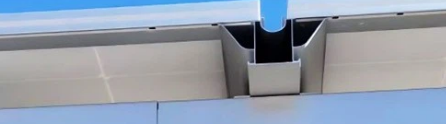
To prevent leaks, professional installers use gutter systems between the solar panels. These gutters are strategically positioned in the gaps between panels to direct rainwater away from mounting points, ensuring that no water seeps through to the roof below. This drainage approach not only safeguards the structure but also extends the life of the roofing materials.
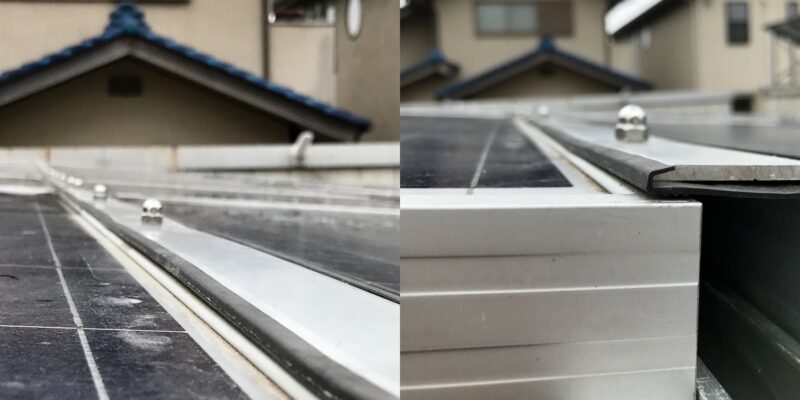
Wanhos carports integrate drainage design, maximising protection for your vehicle from rain while generating revenue through electricity production. Below are the specific design details.
Y-Type Aluminum Carport Mounting System
The Y-type aluminum carport solar mounting system is built for durability and optimal performance. Made from anodized aluminum 6005-T5 and stainless steel, it offers excellent resistance to corrosion and harsh weather. Its flexible, adjustable design accommodates various roof angles, making it ideal for everything from residential driveways to open parking lots. With its sleek Y-shaped structure and solid construction, this system delivers both aesthetic appeal and long-term reliability.
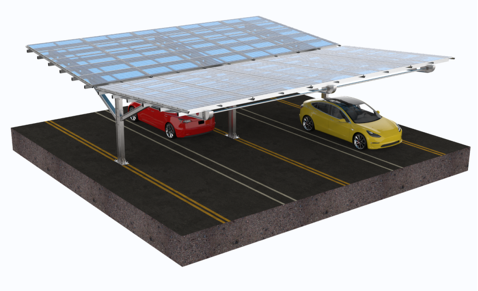
Y-Type Carbon Steel Carport Mounting System
Y-Type Carbon Steel Carport Solar Mounting System is one of the common design carport mounting systems. It is not only designed for strength and stability, but also incorporates smart structural elements to address drainage and durability in all weather conditions. Here are the benifits:
If you are looking for a cost-effective solar carport, the Y-shaped carbon steel carport is your better choice.
Comparison of Y‑Type Carport Solar Mounting Systems
| Feature | Y‑Type Aluminum Carport System | Y‑Type Carbon Steel Carport System |
|---|---|---|
| Primary Material | Anodized aluminum (AL6005‑T5) with stainless steel fasteners | Carbon steel structure (often surface-treated or galvanized) |
| Corrosion Resistance | Excellent—anodized aluminum resists rust, UV, and moisture without sacrificing weight | Good—requires coatings or galvanization; heavier than aluminum |
| Weight and Handling | Lightweight—easy to transport and install | Heavier—may require more labor and equipment |
| Structural Strength | Robust for typical commercial shading/carport needs | Generally stronger for larger spans or heavier loads |
| Waterproofing Strategy | Integrated water-proof inner clamps and gutter channels between panels to channel water away | Similar approach possible but may involve welded flashing or steel gutter components |
| Installation Speed | Faster—pre‑assembled modules and fewer heavy components | Slower—requires careful alignment and handling of heavier components |
| Maintenance & Longevity | Low maintenance—anodized finish lasts for decades | Requires periodic inspection of coatings or paint |
| Ideal Use Cases | Residential, light-commercial, coastal, and corrosion-prone environments | Industrial-scale carports, heavy snow or wind load regions |
In conclusion, the Y‑type aluminum carport system is an excellent choice for projects that value lightweight construction, superior corrosion resistance, and ease of installation, particularly in coastal or humid climates. In contrast, the carbon steel Y‑frame system is better suited for heavy‑load applications where maximum structural strength takes priority over ease of handling.