New to Solar? 65 PV Plant FAQs to Solve Your Doubts – PART 3
In the previous parts of this series, we explored a wide range of basic and intermediate questions about PV plants, helping you understand both the foundations and the key considerations during installation. In this third part, we’ll dive even deeper into practical issues such as system safety, maintenance, and troubleshooting—topics that are crucial for long-term performance and reliability. Whether you’re planning a project or already running one, these insights will guide you toward smarter decisions. New to solar? 65 PV plant FAQs to solve your doubts! Let’s continue with the third part.
Answers For Question 45-60
45. Will the inverter and panels leak electricity?
No. As long as we install the system according to design standards, with secure wiring and proper grounding, leakage will not occur.
46. Will surface damage to PV panels affect performance?
Yes. Surface damage can cause abnormal power generation and potential leakage.
47. Is the inverter easily damaged?
No. Our inverters are CQC-certified, comply with PV industry standards, and come with a 5-year warranty.
48. What causes low inverter power generation?
There are multiple reasons. First, this ensures that we can match the panels and inverter properly. Then check system operation, wiring connections, and component performance.
49. Can the inverter be installed outdoors?
Yes. With an IP65 rating, it can operate outdoors as long as it is not immersed in water. However, avoid prolonged direct sunlight to prevent overheating and load reduction.
50. Will the inverter consume power at night?
Yes, but very little. Due to the output filter circuit, standby consumption is less than 1 kWh per month.
51. What are the common types of PV mounting structures?
- Stainless steel (304): High cost, excellent durability, and high recycling value.
- Aluminum alloy (A16005-T5 anodized): Lightweight, corrosion-resistant, aesthetic, commonly used on rooftops, but lower load capacity.
- Hot-dip galvanized steel (Q235): Strong load-bearing, mature technology, cost-effective, widely used in residential and utility projects.
52. How can we extend the service life of PV mounting structures?
Design must consider weather resistance, wind and snow loads, and corrosion. Reliable structure, correct installation, and minimal maintenance ensure long-term durability.
53. What aspects of PV racks matter most to customers?
Customers value clear specifications and reliable product explanations. Material quality and surface treatment greatly affect performance, which is why branded products often command higher trust and prices.
54. What should we consider when selecting a PV mounting system?
Factors include installation site conditions (soil, climate, wind, and snow), material selection, and mounting method. Cost, durability, ease of maintenance, and we should also evaluate recyclability.
55. How stable are PV mounting systems? Will they fail after a few years?
Brackets from reputable brands are certified by international testing agencies, pass salt spray and ammonia corrosion tests, and have corrosion resistance lifespans of up to 25 years.
56. How often should we clean the PV module? What precautions should be taken?
- Rainy regions: Minimal manual cleaning required.
- Dry/dusty regions: About once a month.
- Snowy regions: Remove heavy snow promptly.
Clean in the morning or late afternoon to avoid high temperatures. Use a soft brush and clean water with gentle pressure. Do not clean cracked modules to avoid electric shock.
57. How do I troubleshoot common household PV system problems?
Within the warranty period, first contact the installer or O\&M provider. They will provide remote guidance or arrange an on-site inspection if needed.
58. How can I reduce PV system maintenance costs?
Choose reliable, proven products with good after-sales support. Follow the system manual, conduct regular inspections, and perform timely cleaning.
59. When is the best time for maintenance?
During early morning or evening when the system is not generating power. Always use insulated gloves and tools.
60. What are some prohibited practices for PV system safety?
- Do not perform live maintenance or dismantling.
- Do not step on or strike PV modules.
- Do not clean while the system is operating.
- Do not use corrosive cleaners or abrasive tools.
61. What are the applications and installation methods of distributed PV systems?
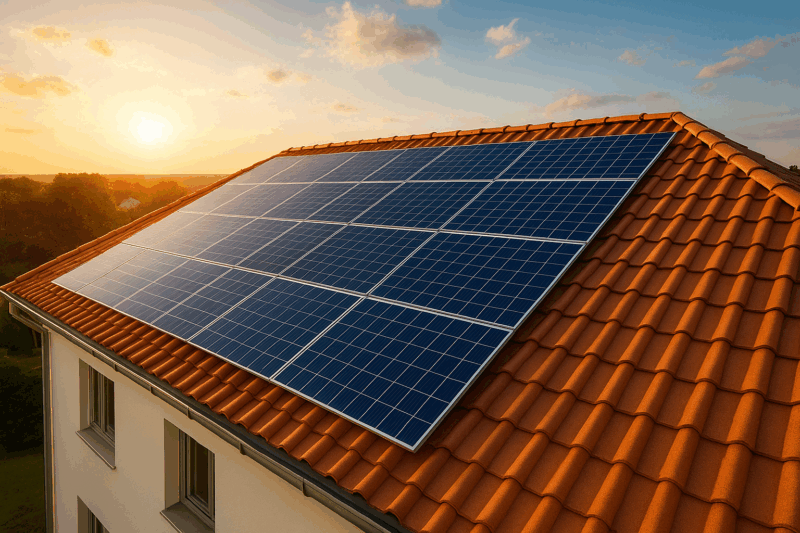
They can be installed on ground, rooftops, facades, and balconies. Common sites include schools, hospitals, shopping malls, villas, factories, carports, and bus stops. Mounting methods include concrete, steel sheets, and tiled roofs.
62. Can I replace damaged parts myself?
Not under strong sunlight or midday heat. If replacement is necessary, do it in the morning or evening and seek professional assistance.
63. Should I disconnect the PV system during thunderstorms?
Systems are equipped with lightning protection, but for added safety it is recommended to disconnect the combiner box breaker to prevent damage from direct lightning strikes. Regularly test the lightning protection module.
64. How safe is PV power generation? How are issues like lightning, hail, and leakage handled?
The system has overload and leakage protection that disconnects automatically under abnormal conditions. PV modules use high-strength tempered glass, tested for wind loads up to 200 Pa and snow loads up to 7200 Pa. Even if one module is damaged, others continue to operate normally.
65. Will shading (houses, leaves, bird droppings) affect power generation?
Yes. Shading reduces efficiency and may cause hot-spot effects, overheating the obstructed cells and damaging them. To prevent hot spots, bypass diodes must be installed in series branches and DC fuses in parallel strings.
So for new to solar, 65 PV plant FAQs to solve your doubts, in next few days we will publish the last part. If you are interested in knowing more or sharing insights with us, please feel free to contact.