Ground Screws for Solar Mounting: A Comprehensive Guide
When installing solar panels, a stable and secure foundation is crucial. Therefore, in ground-mounted solar systems, ground screws—also known as helical piles or earth screws—are becoming an increasingly popular alternative to traditional concrete foundations. Not only do they provide a fast installation process, but they also offer an eco-friendly and durable anchoring solution. Moreover, they are especially advantageous for large-scale projects or sites with uneven terrain, where traditional methods may be more challenging and time-consuming.
This guide will explain what ground screws are, how they work, and why they are essential in solar mounting systems.
What Are Ground Screws?
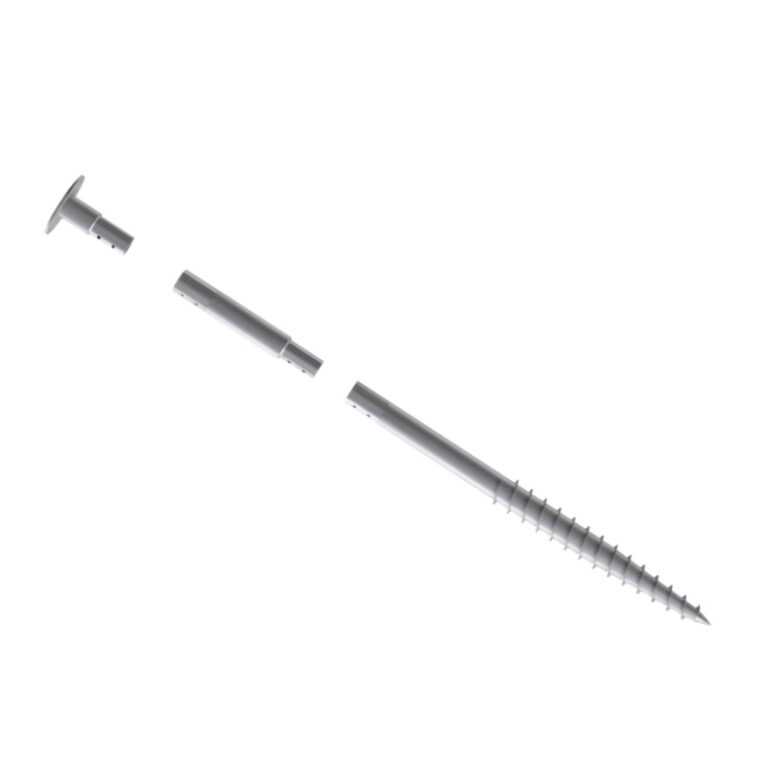
Manufacturers design a ground screw as a steel pile with a helical thread (similar to a giant screw) that installers screw directly into the soil without excavation or concrete. It serves as a foundation post supporting the solar mounting structure.
Key components:
- Shaft: The main cylindrical body.
- Helical blade: The spiral-shaped section that helps the screw penetrate the soil and stay anchored.
- Flange/Top plate: The flat or bracketed top section where mounting rails or beams are fixed.
- Hot-dip galvanized coating: A protective zinc layer that resists corrosion for decades.
How Ground Screws Work in Solar Mounting
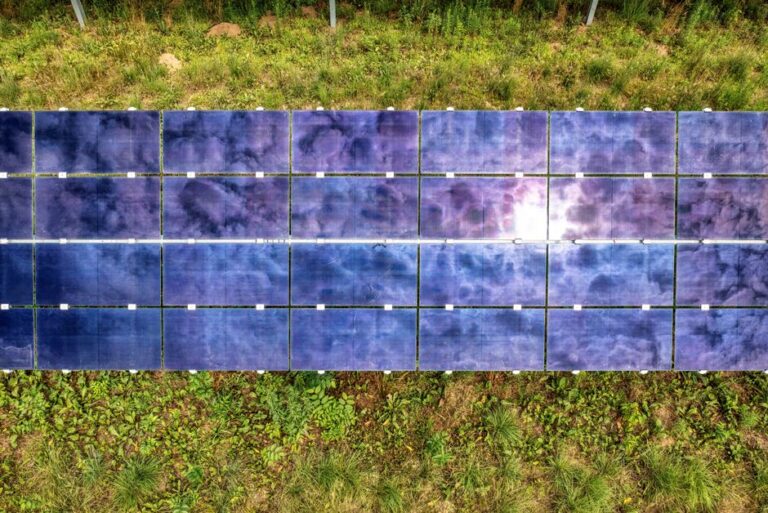
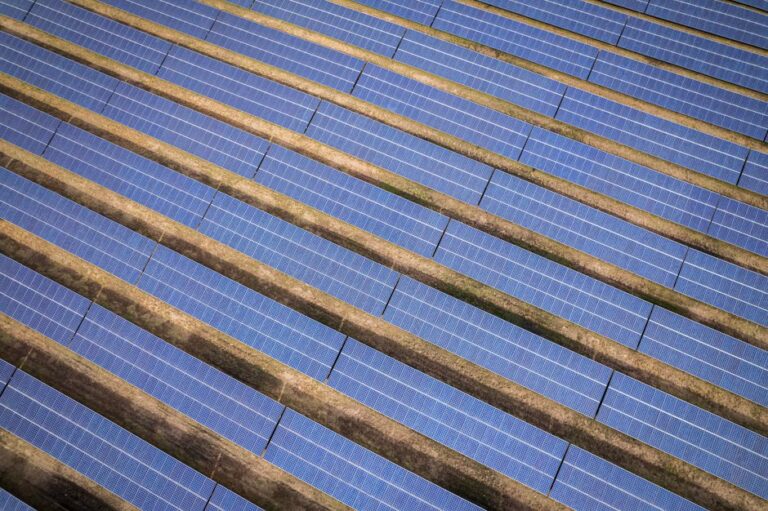
Installers place rows of ground screws in a ground-mounted solar system according to the system’s design layout.
These screws:
- Transfer the weight of the solar structure and panels into the soil.
- Provide lateral stability to resist wind loads.
- Distribute forces evenly to prevent settlement or tilting.
Advantages of Ground Screws Over Concrete Foundations
| Feature | Ground Screws | Concrete Foundations |
|---|---|---|
| Installation speed | 30–60 seconds per screw using hydraulic machinery | Several days (excavation, pouring, curing) |
| Environmental impact | Minimal soil disturbance; no curing chemicals | Soil excavation; cement production emits CO₂ |
| Reusability | Can be removed and reused | Not reusable |
| Seasonal adaptability | Can be installed year-round, even in frost conditions | Curing is temperature-sensitive |
| Cost | Lower labor and time costs | Higher labor, material, and equipment costs |
Site Suitability and Soil Conditions
Ground screws can be installed in a variety of soils, including clay, loam, and sand. However, certain conditions affect performance:
- Ideal: Firm, compact soils that provide strong lateral resistance.
- Challenging: Rocky soils or areas with large boulders (require pre-drilling).
- Unsuitable: Extremely loose or swampy soils (may require specialized designs).
Installation Process
Site Survey: Soil testing and load calculation.
Layout Marking: Installers mark the position of each screw according to the array design.
Screw Installation: Hydraulic torque machines screw them into the ground to the required depth (often 1.2–2.5 m).
Leveling and Alignment: Ensure all screws are at the correct height and perfectly aligned.
Mounting Connection: Attach the ground-mounted racking system to the screws.
Longevity and Maintenance
Service life: High-quality, hot-dip galvanized screws can last 25–30 years.
Maintenance: Check for soil erosion or mechanical damage every few years (minimal).
Corrosion resistance: The zinc coating protects the steel, and in coastal areas, installers recommend additional anti-corrosion measures.
Cost Considerations
How much it costs depends mainly on the following factors:
- Screw size and length (longer screws for softer soils).
- Soil conditions (rocky terrain may require pre-drilling).
- Labor and machinery rental.
For large solar farms, the overall savings in time and labor can make ground screws more cost-effective than concrete.
Real-World Applications
Utility-scale solar farms: Speed and scalability make them ideal for 10+ MW projects.
Rural/agricultural solar: Minimal ground disturbance means land can still be used for crops or grazing.
Temporary solar setups: Easy removal without permanent damage to the land.
Summary
Ground screws offer a modern, sustainable, and efficient foundation solution for solar mounting systems. They eliminate the delays of concrete curing, reduce environmental impact, and provide long-term durability. Whether you are working on a small off-grid installation or, conversely, managing a multi-megawatt solar farm, understanding ground screw technology is essential. By gaining this knowledge, project owners can not only make smarter decisions but also move forward faster and, furthermore, choose greener solutions that benefit both the project and the environment.