
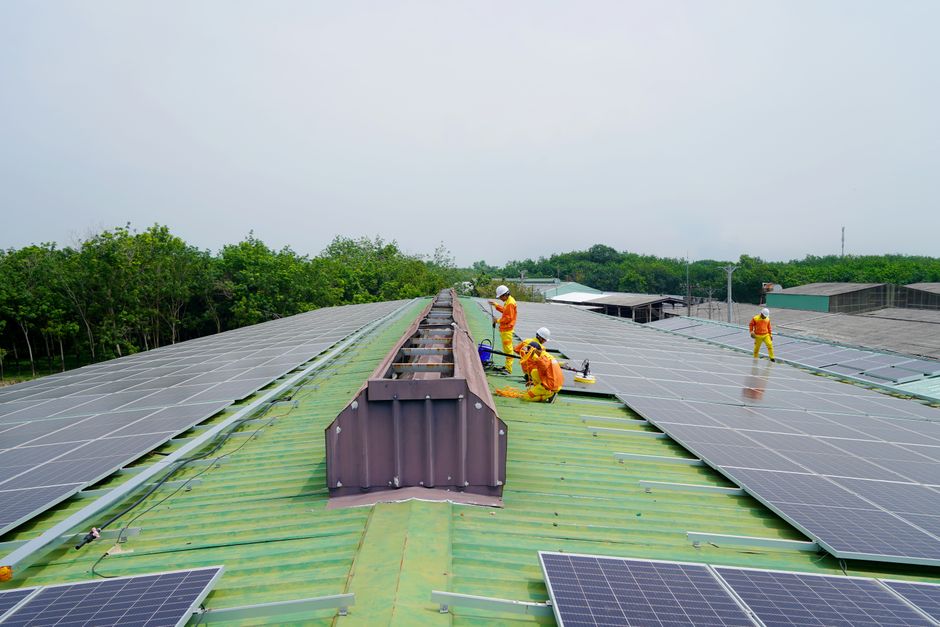
Ballasted Solar Roof Mounts from China: Practical Factors That Decide Project Safety and Install Speed

When your next commercial flat‑roof PV project needs a non‑penetrating mounting solution, a ballasted solar roof mount from China often looks like a fast, cost‑effective choice. But the real field decision isn’t about finding the lowest per‑watt price. It’s about whether the system you specify will stay put during a storm, assemble without eating your labor budget, and not overload a roof that was never designed for extra dead weight. This guide comes from years of walking factory floors and standing on windy rooftops, and it’s written for EPC teams, installers, and procurement managers who need more than a glossy spec sheet.
What Makes a Ballasted System Work — and Where It Can Go Wrong
A ballasted mounting system is not simply “solar panels held down by concrete blocks.” It is an engineered assembly of aluminum or galvanized steel rails, module clamps, interlocking components, and carefully positioned ballast. The ballast weight resists overturning moments created by wind suction on the tilted module array. How well this works depends on three things most project specifications overlook until too late: the roof’s structural capacity, the local wind climate, and the aerodynamic edge zones of the array.
In our experience, the most common site mistake is underestimating the ballast requirement at roof edges and corners, where wind uplift can be three to five times higher than in the center. A system that passes a simple central‑zone calculation can fail at the parapet line if the wind load analysis relies on generic assumptions rather than a site‑specific building code study. That’s why serious suppliers of China ballasted solar roof mounts include wind load reports, not just a one‑size‑fits‑all block count.
Wind Load Engineering: The Real Decision Driver for Ballasted Systems
Anybody can offer a mounting system with ballast trays. Few can show you how they arrived at the ballast weight for your actual roof. When sourcing from China, ask for more than a standard statement like “tested to wind speed 160 km/h.” You need to see the calculation methodology based on codes such as AS/NZS 1170, EN 1991‑1‑4, or the local standard that governs your project site. Without this, you’re buying metal and blocks, not a verified safety system.
Practical factors that change ballast requirements materially include:
- Parapet height and openings. A solid parapet reduces edge zone pressure coefficients; a missing or low parapet increases them significantly.
- Module tilt angle. A 10‑degree tilt creates less overturning moment than a 15‑degree tilt, directly reducing the needed ballast. This small design choice can save hundreds of kilos per cluster.
- Array geometry. Continuous rows with interlocking rails share uplift loads. Isolated small clusters suffer much higher localized forces.
Experienced EPC teams check wind load data for the specific roof zone (corner, edge, interior) and understand that the “standard” ballasted roof mount from a catalogue may need modification. Intelligent Chinese manufacturers who work extensively with international projects provide zone‑specific ballast plans rather than a single block quantity. That’s a procurement filter you shouldn’t skip.
Material Choices: Aluminum vs. Galvanized Steel in Ballasted Mounts
Ballasted roof mounts from China are available in two dominant material paths: extruded aluminum (typically AL6005‑T5) and hot‑dip galvanized steel. Neither is universally better; the right choice depends on your roof structure, corrosion environment, and ballast strategy.
The table below compares the two for ballasted applications. It’s based on field observation, not just lab data.
| Factor | AL6005‑T5 Aluminum | Hot‑Dip Galvanized Steel |
|---|---|---|
| Self‑weight contribution | Low — adds minimal ballast mass | Higher — rail weight itself acts as ballast |
| Corrosion resistance | Excellent for most environments; works well in coastal zones | Good when coating is intact; scratches near fasteners must be touched up |
| Installation handling | Lighter, faster to carry and place on the roof | Heavier, may require more labor or lifting equipment |
| Additional ballast blocks needed | Generally higher, because system weight is low | Often lower, since steel weight contributes to dead load |
| Best suited for | Roofs with limited structural capacity where total dead load must be minimized | Roofs with enough spare load capacity, where reduced block count speeds install |
One nuance often missed: when you mix aluminum rails with steel fasteners on a coastal Chinese‑made ballasted mount, galvanic corrosion becomes a real risk. Quality manufacturers, including Wanhos, pair AL6005‑T5 rails with SUS304 stainless steel fasteners and isolating EPDM pads to break the electrical circuit. If a supplier doesn’t mention this detail, you’re likely buying a design that will degrade faster in humid or salt‑spray environments.
Installation Speed: Pre‑Assembly and Rail Design Matter More Than You Think
Labor cost on a flat roof can make or break project feasibility. While many procurement decisions focus on material price per watt, the hours your crew spends aligning rails, positioning ballast blocks, and tightening dozens of small nuts eats into the margin fast.
Chinese ballasted mounting systems with the following design features consistently show faster install times:
- Pre‑assembled rail‑clamp interfaces. Captive channel nuts and pre‑fitted end‑clamps eliminate the step of sliding nuts into rail slots. Wanhos uses this approach to cut module attachment time by roughly 10–15% in typical projects.
- Interlocking rail connectors with alignment stops. These prevent rail joint misalignment and reduce measurement time. Crews can build long rows by simply clicking rails together.
- Ergonomic ballast tray designs. Trays that allow blocks to be placed from above, without threading bolts, reduce repetitive motion and speed up ballast positioning.
However, a fast system is only good if the clamping zones on the module frames are respected. Many installers, in a hurry, position clamps outside the manufacturer‑recommended zone, which can lead to micro‑cracking or long‑term frame deformation. A mounting system that forces correct clamp positioning — for example, via pre‑punched marks or alignment jigs — helps prevent that field error. When you evaluate samples from a Chinese supplier, check tooling marks, not just polished surface finishes.
When a Pure Ballasted System Reaches Its Limit
Ballasted mounts aren’t always the answer. I’ve seen projects where a ballasted system was specified because “the roof must not be penetrated,” only to fail the structural load check later. Adding ballast blocks increases dead load dramatically — often 20–35 kg/m² or more in high‑wind edge zones. Many older commercial roofs were designed for a superimposed dead load of 15–25 kg/m² on top of the roofing assembly. If your structural engineer says the roof can’t take the extra weight, you’ll need a different approach.
Other red flags for pure ballasted systems:
- Unblocked parapets below 600 mm. Wind uplift increases sharply; ballast demand may become impractically high.
- Tilt angles above 15°. Even small angle increases can raise overturning moment noticeably, requiring significantly more ballast.
- Extremely high wind regions (gust speeds above 220 km/h). In such locations, a hybrid solution — ballasted system with mechanical attachments at perimeter zones — is often safer and more cost‑effective than trying to ballast the entire array.
- Uneven or deflecting roof decks. Ballast blocks can concentrate load, and roof deflection can break waterproofing membranes over time if protective mats aren’t specified.
When you encounter these conditions, reputable Chinese mounting manufacturers can advise on hybrid fixing or alternative low‑slope roof solutions. The conversation with your supplier should shift from “how much ballast do I need” to “given this roof report, what attachment method makes engineering sense.”
Sourcing Ballasted Solar Mounts from China: A Practical Procurement Checklist
Buying a China ballasted solar roof mount is not like buying standard commodity components. Here’s what I’ve learned helps EPC and procurement teams filter suppliers effectively:
- Wind load calculation report specific to your project. Ask to see the supplier’s internal wind engineering capability or their relationship with a wind consultant. A generic “passed wind tunnel test” is not enough; request a zone‑by‑zone ballast schedule.
- Material certificates with traceable test reports. Ensure the aluminum grades (AL6005‑T5) and steel grades (Q235B or equivalent with hot‑dip galvanization to at least 55 µm coating thickness) are backed by mill certificates.
- Fastener specification and corrosion compatibility. Check that all fasteners are marked as SUS304 or better, and that the system includes EPDM or similar isolation between dissimilar metals. This is non‑negotiable for coastal projects.
- Pre‑assembly level and packaging. Systems shipped in well‑organized, labeled packs with sub‑assembled components reduce on‑site handling errors. Look for suppliers who understand jobsite logistics, not just container loading.
- Structural design flexibility. Can the supplier provide custom rail lengths, tilt angles, or ballast tray configurations without a huge cost premium? Generic‑system suppliers often force your project into their shape, not the other way around.
Wanhos, for instance, has refined its ballasted roof mount offering by focusing on AL6005‑T5 aluminum profiles with integrated grounding features and a design that allows ballast placement before module installation — a small sequence change that dramatically improves crew safety and speed. When you’re comparing offers, look beyond the price and check whether the supplier’s engineering approach actually reduces your project risk.
Frequently Asked Questions
How do you calculate the required ballast weight for a flat roof solar array?
Ballast weight is determined by wind uplift loads from local building codes (e.g., ASCE 7, Eurocode). The mounting system supplier runs calculations based on building height, roof zone, parapet geometry, module tilt, and array layout. A verified report will show overturning moment and sliding resistance for each zone, translating wind pressures into kilograms of ballast per support. Never rely on a single number for the whole roof.
Do ballasted mounts work on all types of flat roofs?
They work on most membrane‑covered flat roofs (EPDM, TPO, PVC, bitumen) and concrete decks, provided the roof structure can support the additional dead load and protective mats are used to prevent membrane damage. They are not suitable for roofs with slopes over 5° unless anti‑slide features are integrated, or for roofs with insufficient structural capacity. A structural engineer must confirm the roof’s load limits before specifying the system.
What maintenance do ballasted solar mounting systems need?
Maintenance is relatively low. Annual inspections should check for shifted ballast blocks, loose fasteners (torque re‑check on a sample of clamps), corrosion marks on steel components, drainage blockages under rails, and integrity of protective mats. After major storms, a visual check on perimeter zones is recommended. In coastal areas, more frequent corrosion inspection is prudent even with stainless fasteners.
Can ballasted mounts be used in areas with heavy snow loads?
Yes, but snow load must be added to the dead load check. In regions with high snow accumulation, the roof structure may already be near its design limit, leaving little room for ballast. The mounting system must also be evaluated for snow sliding forces, which can act differently from wind. Some designs incorporate snow guards or customized module spacing to manage snow drift.
How can I verify wind load certifications from a Chinese supplier?
Review the wind tunnel test report or computational fluid dynamics (CFD) analysis. Look for the specific roof configuration tested, the reference wind speed, and the pressure coefficients used. Ask if the report was issued by an independent third party or an in‑house team. A credible supplier will share the full report, not just a summary page, and can adapt the results to your site’s code. Wanhos, for example, provides project‑specific wind load reports through its technical support team, not a one‑time generic certification.
Before You Send a Quotation Request
If you’re preparing to specify a ballasted solar roof mount from China, gather these pieces of information before you reach out to any supplier. A professional manufacturer can only give you a reliable offer and layout when you provide:
- Roof structural report or allowable superimposed dead load,
- Full roof plan with parapet heights, existing penetrations, and drainage layout,
- Design wind speed for the project location according to the governing building code,
- Module dimensions, weight, and tilt angle you intend to use,
- Any special site conditions — coastal exposure, high seismic zone, snow load data.
This isn’t a bureaucratic step. It’s how you move from a catalogue ballast system to
Similar Posts
Solar balcony hook system accelerates energy consumption revolution
Recently, Swedish home furnishing retail giant IKEA officially launched the “Eco Flow Stream” series of economical…
What Is Galvanized Steel? Why Solar Projects Use It
Galvanized steel is a cornerstone material in countless industries, prized for its ability to withstand the…
Components of a Solar System
A robust solar system relies on more than just solar panels. It requires a collection of…
Ground Mounted Solar Panels: Layout Choices That Affect Cost and Installation Speed
The biggest commercial ground mount mistake we see in engineering review isn’t picking the wrong panel—it’s…
What Is a Hybrid Solar System and Why It’s Changing the Future of Energy
What Is a Hybrid Solar System A hybrid solar system combines the best features of both…
Floating Solar vs Ground Mounted Solar
As solar energy adoption grows worldwide, choosing the right type of installation becomes a crucial decision…


