

Best Solar Panel Operating Environment
Choosing the best solar mounting system starts with understanding the ideal operating environment for your panels. Adequate sunlight, stable temperatures, and the right installation location directly influence energy output and system lifespan. By matching your solar panels with a well-designed mounting solution, you can maximize performance, reduce maintenance needs, and ensure long-term reliability in any climate.
Core Environmental Requirements
Adequate sunlight is the most important factor for solar panel efficiency. Ideally, panels should receive at least 4 hours of effective sunlight per day. Direct sunlight provides maximum energy output, while dust, snow, or any cover on the panel surface should be avoided.
The optimal operating temperature is between 15°C and 35°C. High temperatures above 40°C can cause voltage drops and reduce efficiency by 10% to 25%. In colder environments, output remains stable, but snow removal is necessary to maximize the use of reflected light.
Choosing the Right Installation Location
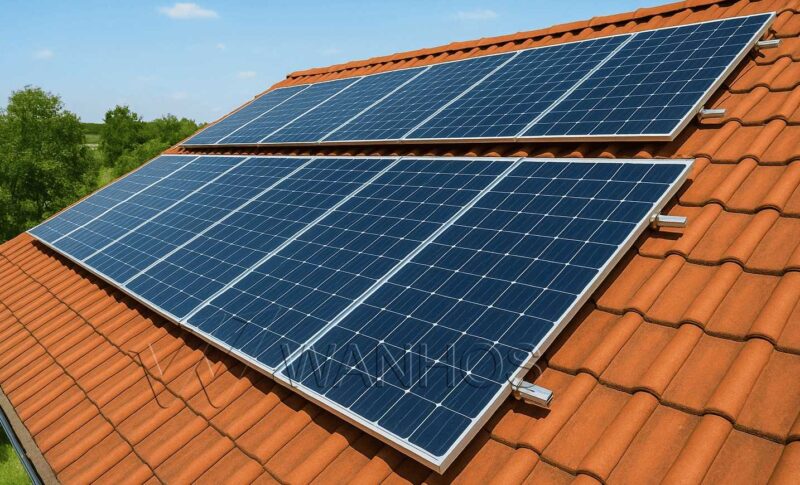
Rooftop installation works best when facing south in the Northern Hemisphere or north in the Southern Hemisphere to maximize sunlight exposure. It is important to evaluate roof load capacity (at least 30 kg/m²) and waterproof performance to prevent leaks.
Ground installation is suitable for large-scale systems, allowing adjustable tilt angles (close to local latitude) for higher efficiency. Avoid flood-prone or high-wind areas and clean regularly to reduce dust buildup.
Special scenarios such as water surface installations require corrosion-resistant mounting systems and reinforced structures to withstand waves. For wall-mounted or curved surfaces, flexible thin-film panels like CIGS are ideal.
Optimizing for Environmental Adaptability
Avoid shading from tall buildings, trees, or other obstacles. If small shadows are unavoidable, micro-inverters or optimizers can isolate affected modules to prevent performance loss.
In high-sunlight areas like deserts or plateaus, polycrystalline or bifacial modules can boost output by 10%–30% using reflected light. In cloudy or rainy regions, monocrystalline panels perform better in low light, while amorphous silicon panels are suitable for indoor or special applications.
Weather Protection and Extreme Conditions
Strong wind and waterproof designs are essential. Use reinforced mounting systems with bolts and multiple support points to resist typhoon-level winds (≥12). Ground systems should ensure smooth drainage, and panels should have waterproof back sheets and IP67-sealed connectors to prevent rain penetration.
In snowy regions, increase the tilt angle to help snow slide off faster, and consider adding heating elements to prevent ice buildup. In dusty areas, clean panels regularly and use anti-abrasion glass coatings for better protection.
One-click WhatsApp consultation Get the latest quotes and free design proposals


