Building A Floating Solar Power Station – What You Need To Know?
Not all rooftops are suitable for solar panels due to issues like shading, obstructions, age of the roof, and limited space. These issues often lead homeowners to seek alternative locations for photovoltaic installations. Unlike traditional solar arrays, floating solar systems are installed on water, eliminating the need for additional ground space. In this article, Wanhos Solar explains some important points to know about building a floating solar power station. Building a floating solar power station – what you need to know?
What is floating photovoltaic power generation?
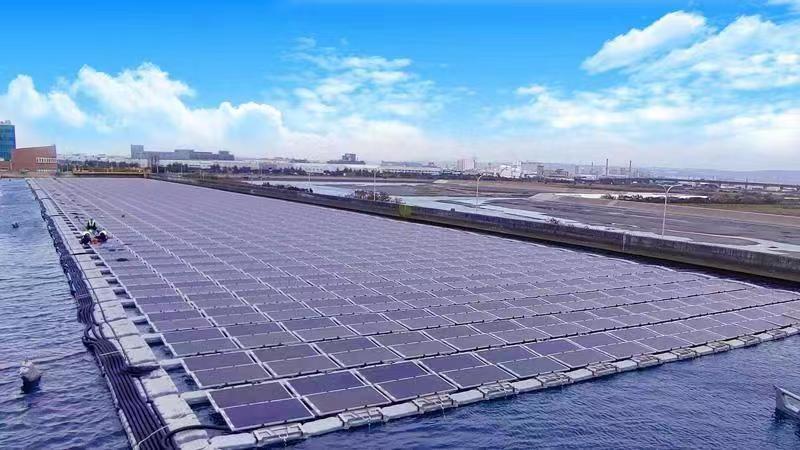
Building a floating solar power station – what you need to know? First you need to know what is floating PV power generation. This eco-friendly method of electricity generation combines marine and renewable energy technologies. Solar modules are designed to float on water surfaces, such as dams or reservoirs, with electricity transmitted to transmission towers via underwater cables. These panels are designed to be dust-proof, lead-free, highly resistant to moisture, and waterproof.
Floating solar systems share many similarities with other ground-based photovoltaic systems, the primary difference being that they are installed on water, thus eliminating the need for land. Often, even in countries with vast land and abundant resources, land near major energy-consuming cities and industrial areas may be unavailable or cost-prohibitive. In such cases, floating photovoltaic systems are an attractive solution because they are not constrained by land availability. Floating solar installations offer an effective power generation solution, particularly in areas where land constraints preclude energy generation.
Advantages of Floating Solar Power Plants
1. Land Conservation
Ground-mounted solar panels typically occupy valuable land resources. In contrast, floating photovoltaics offer a land-saving solution, such as installation on unused water bodies such as lakes, reservoirs, or ponds. This frees up land previously reserved for ground-based power plants for other uses. Furthermore, installing solar panels on water bodies avoids the need to cut down trees, thus protecting the environment.
2. Utilizing Unused Water Surfaces
Floating photovoltaics can be applied to various water bodies, effectively increasing the utilization of these spaces while mitigating adverse impacts on pond or lake ecosystems. Selecting an artificial water body also offers the advantage of easy integration with existing power plants, promoting simplicity and synergy.
3. Environmental Benefits
The cooling effect of the water improves the performance of PV modules while also reducing evaporation, a critical factor in drought-prone regions. Furthermore, the presence of solar panels on the water reduces algae blooms in freshwater bodies, which can cause health problems when found in drinking water sources or kill aquatic plants and animals. Producing clean energy from floating solar panels helps reduce reliance on fossil fuels for power generation, thereby lowering greenhouse gas emissions.
4. Improving Solar Panel Efficiency
Although solar panels perform well even in higher temperatures, their efficiency decreases over time. Rising temperatures, in turn, affect panel efficiency. However, water can cool photovoltaic panels on the water surface, thereby improving their efficiency.
Design Considerations for Floating Solar Power Plants
1. Anchoring System
An anchoring system is essential in floating photovoltaic power plants. It stabilizes fluctuating water levels, secures the entire array in place, ensures the floating solar array remains within a reasonable distance from its desired location, and mitigates displacement caused by environmental forces such as wind, waves, and currents.
2. Anchoring Design
Accurate environmental data estimates are crucial when determining the design of the anchoring system. For example, if the design assumes a maximum wind speed of 30 m/s, but the actual maximum wind speed reaches 40 m/s, there is a risk that many components (including the floats, connectors, ropes, and anchors) will deteriorate over time.
3. Floating Bridge/Floating Structure
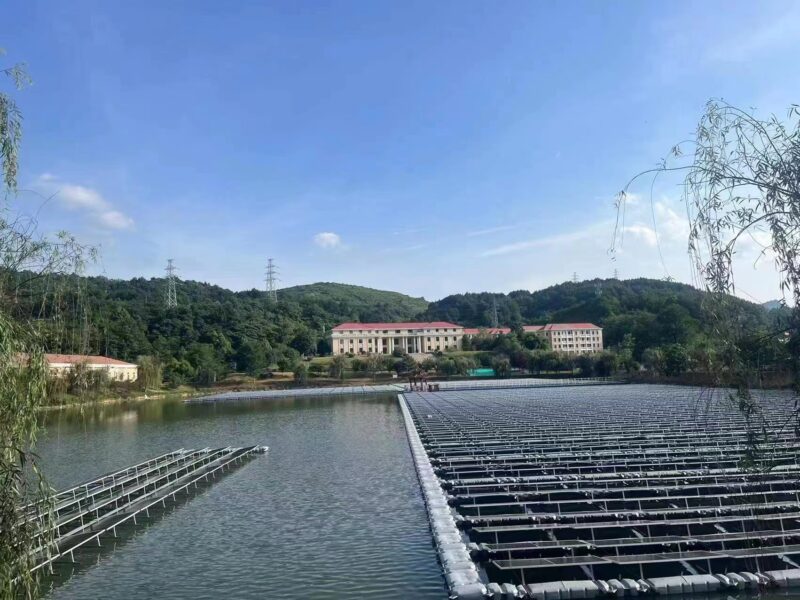
The floating components that hold the solar panels include high-density polyethylene (HDPE) floats. These floats must undergo a series of rigorous tests, including Hunt sealing tests, aging tests, UV tests, and German Technical Inspectorate (TUV) wind tunnel tests. Aluminum alloy brackets should also simplify the process of attaching solar modules to the main float, saving labor time and costs. Furthermore, these floats have a service life of 25 years, making them a good investment for those seeking a long-term solution.
4. Main Float Design Elements
The material selected for the main float must meet several criteria. First, it must be fully recyclable and non-toxic, with good resistance to UV rays, alkalis, and seawater to ensure durability. It is also crucial that it can adapt to fluctuations in reservoir water levels, allowing for easy adjustments when needed. The overall structure should be able to withstand extreme temperature fluctuations, ranging from -60°C to 80°C. Finally, a long lifespan of materials is crucial, ideally with a 25-year underwater durability.
5. Inverter Installation
Similar to standard solar power plants, a combiner box transmits the direct current (DC) electricity generated by the solar PV modules to the inverter, where it is converted to AC. Depending on the needs, a central inverter or multiple string inverters can be used. Depending on the size of the array and its proximity to shore, the inverter can be located on a separate floating platform or on land. For smaller floating solar systems, the inverter is typically located on land near the solar array.
6. Cable Routing
Cable management and routing in floating PV power plants require careful planning. Unlike other ground-based PV projects, floating solar systems encounter varying cable lengths due to the movement of the floating platform caused by wind loads and fluctuating water levels. Providing additional cable length (in the form of slack) is essential to account for this movement. Neglecting this aspect may result in insufficient cable length, putting the cable at risk of breakage under tension. In addition to length, cable size also depends on the cable’s voltage, current, and loss parameters.
What Challenges Face Floating Solar Systems?
1. Installation Cost
Currently, the installation cost of floating photovoltaic systems is higher than that of standard ground-mounted photovoltaic systems. This is primarily due to the large number of buoys, brackets, and additional anchoring equipment required. However, industry experts predict that as floating photovoltaic systems gain popularity and are implemented on a larger scale, costs will become more competitive.
Because they are located on water, these systems are more susceptible to damage such as corrosion. Water is a humid environment, and buoys require materials that can withstand such conditions. This applies not only to metal components but also to wiring, adhesives, and sealants, which must also be resistant to these conditions. The challenges are even greater when considering installation in highly corrosive saltwater bodies like the ocean.
3. Drinking Water Safety
In locations with drinking water sources, such as reservoirs, the materials used to construct floating solar power plants must be contaminant-free. Any negligence in this regard can have serious consequences. This situation also highlights the need to develop new standards and test methods to ensure the safety and effectiveness of floating PV systems in such scenarios.
If you are interested in knowing more or sharing insights with us, please feel free to contact.