The Rise of Floating Solar: Smart Innovation or Risky Investment
The electrical principles of floating solar power generation are similar to those of ground-based and rooftop systems. However, the unique feature is the detachable floating structure, which can be installed in undeveloped waters to generate large-scale electricity on water. Floating solar power offers unique advantages and disadvantages for generating electricity on water. This article will explain the advantages and disadvantages of floating solar power, as well as other useful information.
What is floating solar power?
Floating solar power, also known as floating PV systems, refers to solar arrays located above a body of water. The solar panels are securely mounted on the floating structure. And although they may experience slight swaying, this does not affect the system’s stable power generation. Floating solar systems are typically installed on ponds, lakes, and dams, where winds are relatively low compared to the ocean.
Floating solar power is an environmentally friendly power generation method that integrates marine and renewable energy technologies. The electricity generated by these floating arrays is transmitted via underwater cables to designated transmission towers.
Key System Components
- Solar Panels: Similar to panels used on the ground or on rooftops, they capture sunlight and convert it into electricity. However, more efficient panels can be used to maximize energy output within limited space.
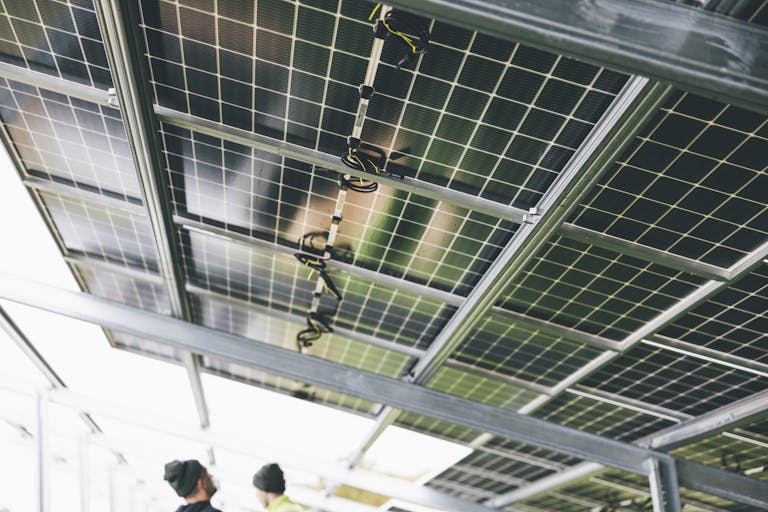
- Floating Platform: Floating platforms are typically constructed from durable, high-density materials, such as HDPE (high-density polyethylene). This ensures the solar panels remain afloat. Aluminum frames can also be added to the floats for enhanced stability and provide a sturdy mounting structure for the solar panels.
- Anchoring System: An anchoring system securely secures the floating platform to prevent drift caused by wind or currents. This ensures the stability and precise positioning of the solar array on the water. Anchor cables can be made of synthetic fiber, steel wire, or chain, depending on the depth and properties of the water.
- Inverter: The direct current (DC) generated by solar panels needs to be converted to alternating current (AC) for use in the electrical system. Inverters perform this critical conversion, ensuring optimized power output for use in the power grid or on-site facilities.
- Cables: Specialized waterproof cables and durable connectors are used to manage the electrical connections within the system. These cables connect the solar panels and transmit the generated power to the inverter and grid connection point on land, ensuring safe and efficient energy transmission.

Advantages of Floating Solar
Spatial Efficiency
Floating solar energy makes good use of space, particularly in areas where land availability is limited or costly. Floating solar systems can be installed on underutilized water bodies such as reservoirs, dams, and lakes, reducing the need to reclaim land or clear natural landscapes to build solar power plants. This is a significant advantage because it allows for electricity generation without sacrificing valuable land resources, freeing up land for other uses.
Improved Efficiency
The symbiotic relationship between water and solar panels in floating photovoltaic systems improves solar efficiency. The water’s natural cooling effect helps maintain a lower operating temperature for the panels, mitigating overheating. This temperature regulation can increase panel efficiency by up to 15%, boosting energy output and ultimately improving return on investment.
Albedo EffectImproved Efficiency
Water’s inherent reflective properties contribute to an albedo effect, which enhances the efficiency of floating solar panels. Sunlight reflected from the water’s surface back to the solar panels increases the number of photons available for conversion into electricity. This mutually beneficial interaction increases overall energy yield, making floating solar systems an attractive option for optimizing solar power generation.
Water Conservation
Floating solar panels help reduce evaporation from water bodies, thereby conserving water resources. Particularly in arid and semi-arid regions, where water scarcity is a growing problem, the shading effect of floating solar panels can significantly inhibit evaporation, protecting vital water resources. Furthermore, by limiting sunlight penetration, floating systems help control the growth of harmful algae, thereby improving water quality.
Lower Installation Costs
Floating solar power can be less expensive than ground-based solar power. This is because there’s no need for land acquisition and extensive site preparation. This often requires significant costs. Furthermore, floating solar systems are located close to existing power infrastructure at nearby hydroelectric power plants or water treatment facilities, saving on integration and transmission infrastructure costs.
Low Impact on Aquatic Life
Preliminary studies indicate that floating solar systems have less impact on aquatic life than other structures above or below the water. The design and positioning of floating solar panels can ensure minimal disturbance to aquatic habitats, promoting healthy coexistence with aquatic ecosystems.
Scalability and Flexibility
You can start with a small floating solar system and expand as needed. The modular nature of floating platforms makes it easy to adapt and scale the system to different site sizes and configurations.
Disadvantages of Floating Solar
Higher Initial Cost
Compared to ground-based photovoltaic systems, floating solar requires an additional floating platform, anchoring system, and more robust, waterproof electrical equipment. These additional infrastructure and components significantly increase the initial investment cost of the project, typically 10% to 25% higher than land-based photovoltaic systems.
Maintenance Challenges
Aquatic environments, especially saltwater ones, are more susceptible to corrosion and damage to equipment. Maintenance and cleaning typically require vessels and specialized divers, making the process more complex and expensive. The attachment and growth of aquatic organisms (such as bird droppings, algae, and barnacles) can affect the efficiency of solar panels and require regular cleaning. Furthermore, cable management and inspection and maintenance of underwater anchoring systems are more challenging.
Application Limitations
Not all water bodies are suitable for floating solar installations. Factors such as water depth, area, bottom conditions, wind and wave conditions, and existing water uses (such as shipping, fishing, and tourism) need to be considered. Floating solar power is limited in cold regions with severe ice formations.
Currently, most floating solar farms are located in artificial water bodies, including reservoirs, wastewater storage ponds, and agricultural irrigation ponds. These facilities also exist in various settings, including quarries and mining sites, dams, and areas close to coastlines. While natural water bodies offer opportunities for solar development, artificial reservoirs offer unique advantages. These reservoirs often have pre-existing infrastructure and access roads, making the installation and maintenance of floating solar systems easier and more cost-effective.
Floating solar power offers unique advantages and disadvantages for generating electricity on water. Above all are the info. for most common situation. If you are interested in knowing more or sharing insights with us, please feel free to contact.