Can Solar Panels Be Mounted on a Flat Roof?
As solar energy becomes a mainstream choice for homes and businesses, one common question arises: can solar panels be mounted on a flat roof? The short answer is yes. In fact, flat roofs often provide a wide, unobstructed surface that makes them highly suitable for solar installations. The key lies in choosing the right aluminum racking system. Let’s look at three popular types used for flat roof applications and compare their advantages, challenges, and costs.
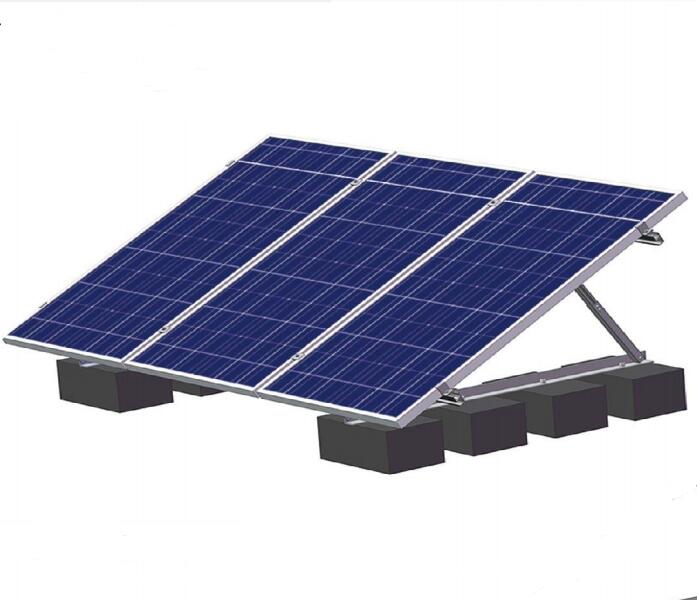
Triangular Aluminum Racks with Continuous Ballast
These racks use a triangular frame to set the tilt angle, while the base is connected by continuous ballast trays (often filled with concrete blocks).
- Pros:
- Uniform weight distribution reduces stress on the roof.
- Easy to adjust tilt angle.
- No roof penetration, minimizing the risk of leaks.
- Cons:
- Heavier due to continuous ballast, requiring a roof with sufficient load capacity.
- Transportation and lifting costs may be higher.
- Installation difficulty: Moderate. Needs careful ballast placement but assembly is straightforward.
- Cost: Medium. Slightly more than simple mounts due to additional ballast trays.
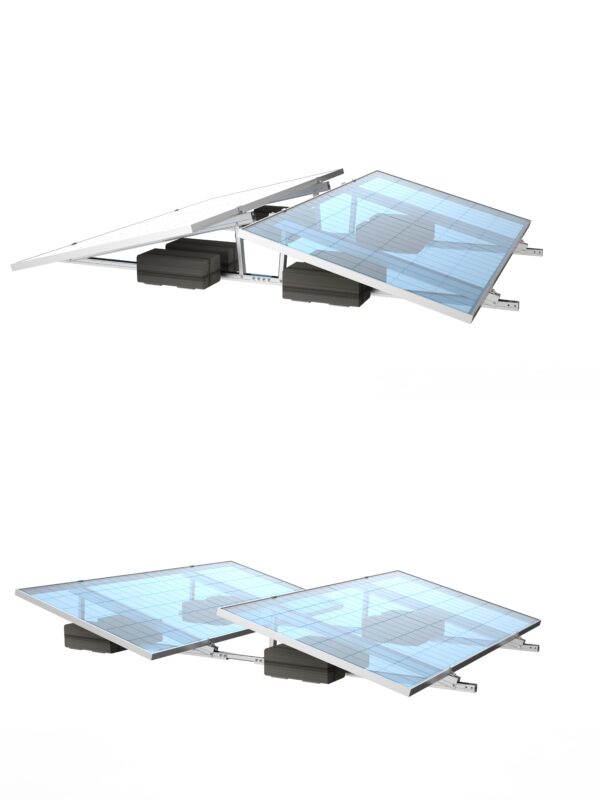
Triangular Aluminum Racks with Individual Concrete Bases
Here, each rack leg is anchored to a separate precast concrete block, eliminating the need for continuous trays.
- Pros:
- Lower overall system weight compared to continuous ballast.
- Easier logistics—concrete bases can be placed individually.
- Suitable for smaller projects or roofs with limited load-bearing capacity.
- Cons:
- Point loads are concentrated under each block, requiring roof structure checks.
- Alignment must be precise to ensure array stability.
- Installation difficulty: Relatively easy. Placement of blocks and rack assembly are simple.
- Cost: Low to medium, depending on the number of bases required.
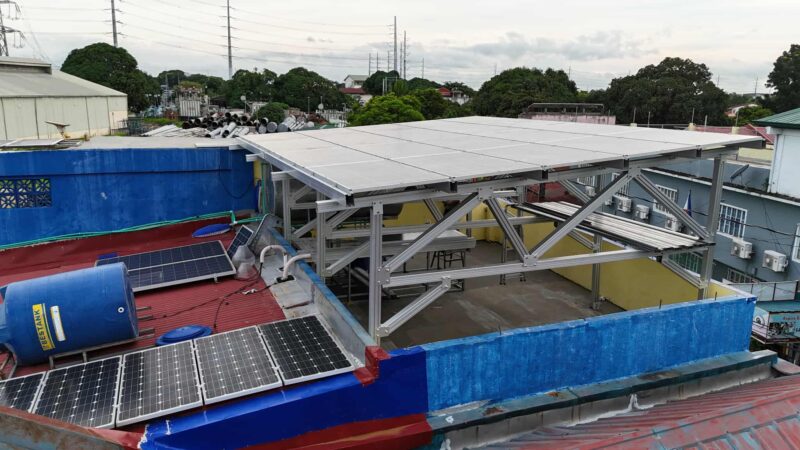
Ground-Like Aluminum Racks for Two Rows of Panels
This system resembles ground-mounted structures, allowing two rows of solar panels to be installed in a back-to-back layout on the roof.
- Pros:
- Maximizes space utilization on flat roofs.
- Higher power density per square meter.
- Increased structural stability with row interconnection.
- Cons:
- Heavier and bulkier than triangular systems.
- Higher wind load due to larger panel surface.
- May require professional engineering to avoid roof overloading.
- Installation difficulty: High. Needs more assembly, alignment, and structural checks.
- Cost: Higher due to more material and labor.
Comparing the Three Options
| System Type | Advantages | Challenges | Installation Difficulty | Cost Level |
|---|---|---|---|---|
| Triangular with Continuous Ballast | Even load, good stability, no roof penetration | Heavy, higher logistics effort | Medium | Medium |
| Triangular with Concrete Bases | Lighter, easier logistics, lower cost | Point loads, alignment critical | Easy | Low–Medium |
| Ground-Like Double Row Racks | Space efficient, high power density | Heavy, wind load, complex install | High | High |
Conclusion
Yes, solar panels can be mounted on flat roofs, and aluminum racking systems offer multiple solutions to balance stability, cost, and ease of installation.
- If you want stability and long service life, choose triangular racks with continuous ballast.
- If your roof has limited load capacity and you prefer a cost-effective solution, go for triangular racks with individual concrete bases.
- If your goal is to maximize energy generation on large flat roofs, then ground-like double-row racks are the best choice, despite higher cost and complexity.
By understanding these options, building owners can make informed decisions and turn their flat roofs into efficient solar power stations.