
What Techniques Are Used to Keep Ground-Mounted Solar Panels Cool?
The Challenge of High Temperatures for Solar Efficiency
Just as scorching summer heat tests human endurance, it also presents significant challenges to the efficiency and safety of solar power installations. High temperatures can substantially reduce the electricity generation capacity of solar panels while simultaneously increasing the risk of equipment damage. For ground-mounted solar systems in particular, which often lack the natural airflow advantages of rooftop installations, implementing effective cooling strategies is essential for maintaining optimal performance.
Effective Cooling Techniques for Ground-Mounted Solar Arrays
1. Strategic Panel Spacing and Orientation
The layout of ground-mounted solar installations plays a crucial role in thermal management. Adequate spacing between rows of panels promotes natural air circulation, preventing heat buildup that can reduce efficiency. Wanhos customizes installation schemes based on specific site conditions to maximize both power generation and ventilation effectiveness.
Research shows that proper air circulation can reduce panel temperatures by 5-10°C, resulting in a 2-5% increase in energy yield. When designing ground-mounted systems, panels should be installed at a height that allows free airflow underneath, creating a chimney effect that draws cooler air from below and expels hot air from above.
2. Regular Clearing of Surrounding Vegetation and Debris
Accumulated vegetation and debris around ground-mounted arrays can significantly impair heat dissipation, leading to overheating. Implementing a regular maintenance schedule to clear the surrounding area ensures unobstructed airflow around and beneath the panels.
Tall grass, shrubs, or fallen branches can block critical air channels, creating heat traps that diminish system efficiency. A well-maintained perimeter not only improves cooling but also reduces fire hazards during extreme heat events.
3. Reflective Ground Covers and Surface Treatments
An innovative approach for ground-mounted systems involves modifying the ground surface beneath and around the panels. Light-colored gravel or specialized reflective ground covers can significantly reduce ambient temperatures by minimizing heat absorption and reflection onto the rear surface of panels.
Some installations utilize white or light-colored rocks or specially designed reflective materials that reject rather than absorb solar radiation. These treatments can reduce ground surface temperatures by up to 15°C compared to dark soil or asphalt surfaces.
4. Active Cooling Systems
For large-scale ground-mounted installations in particularly hot regions, active cooling technologies may prove cost-effective:
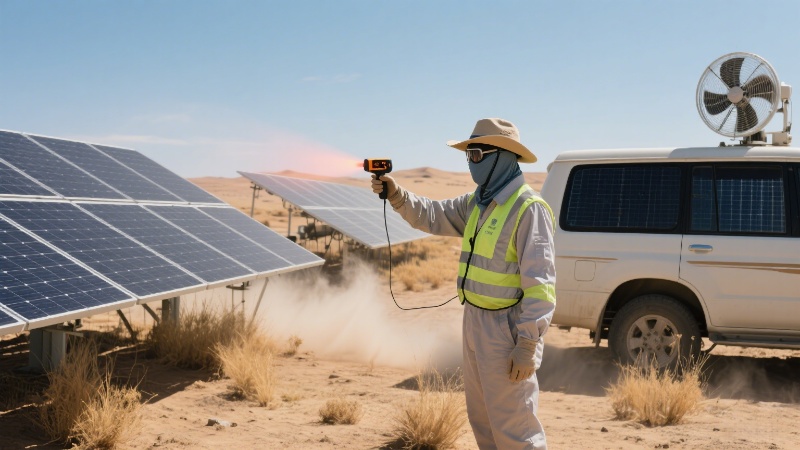
- Water cooling systems: Spraying panels with water during peak temperature periods can rapidly reduce surface temperatures and improve efficiency. Modern systems can recycle water and operate only when temperature thresholds are exceeded.
- Forced air cooling: Strategic placement of fans to create artificial airflow across panel surfaces in areas with consistently low wind conditions.
- Phase change materials (PCMs): Emerging technology that absorbs excess heat during daytime operation and releases it during cooler periods.
5. Protective Canopies for Auxiliary Equipment
While the panels themselves require sun exposure, associated equipment like inverters and distribution boxes benefit from shading. Installing simple protective canopies over these components prevents direct sun exposure and maintains optimal operating temperatures.
These protective structures should be designed to allow adequate airflow while blocking direct sunlight, creating a microclimate that extends equipment lifespan and maintains performance during heat waves.
6. Regular Cleaning and Maintenance
The accumulation of dust, bird droppings, and other debris on panel surfaces not only blocks sunlight but also creates “hot spots” that can damage panels over time. Regular cleaning is particularly important for ground-mounted systems, which may accumulate more dust than elevated installations.
Studies indicate that dirty solar panels can experience temperature increases of 4-5°C compared to clean panels under identical conditions. A regular cleaning schedule, especially during dry, dusty seasons, ensures maximum light transmission and prevents localized overheating.
Conclusion: Maximizing Efficiency Through Temperature Management
Implementing these cooling techniques for ground-mounted solar arrays can significantly improve system performance and longevity. With proper thermal management, solar installations can maintain higher efficiency even during the most challenging weather conditions, ensuring consistent power generation throughout the year.
For large-scale ground-mounted installations, combining multiple cooling strategies often yields the best results. The initial investment in effective cooling solutions typically pays for itself through improved energy yield and extended system lifespan.
As solar technology continues to advance, we can expect to see more innovative cooling solutions specifically designed for ground-mounted systems, further enhancing their performance in hot climates.


