What to Use to Clean Ground-Mounted Solar Panels?
Maintaining clean solar panels is essential for maximizing energy production. Dust, dirt, bird droppings, and pollen can accumulate on panels over time, reducing their efficiency by up to 20–30% in extreme cases. Ground-mounted solar arrays are particularly exposed to environmental elements, making regular cleaning a key part of maintenance. This article provides a comprehensive guide to the tools and methods used for cleaning ground-mounted solar panels, including different types of cleaning machines and motor options.
Why Clean Solar Panels?
Solar panels rely on sunlight to generate electricity, and any layer of dust or dirt can block sunlight from reaching the photovoltaic cells. Regular cleaning:
- Improves efficiency: Restores power output closer to the rated capacity.
- Extends lifespan: Prevents long-term degradation caused by accumulated dirt or corrosive substances.
- Reduces maintenance costs: Prevents hotspots and other issues caused by uneven shading.
Types of Solar Panel Cleaning Machines
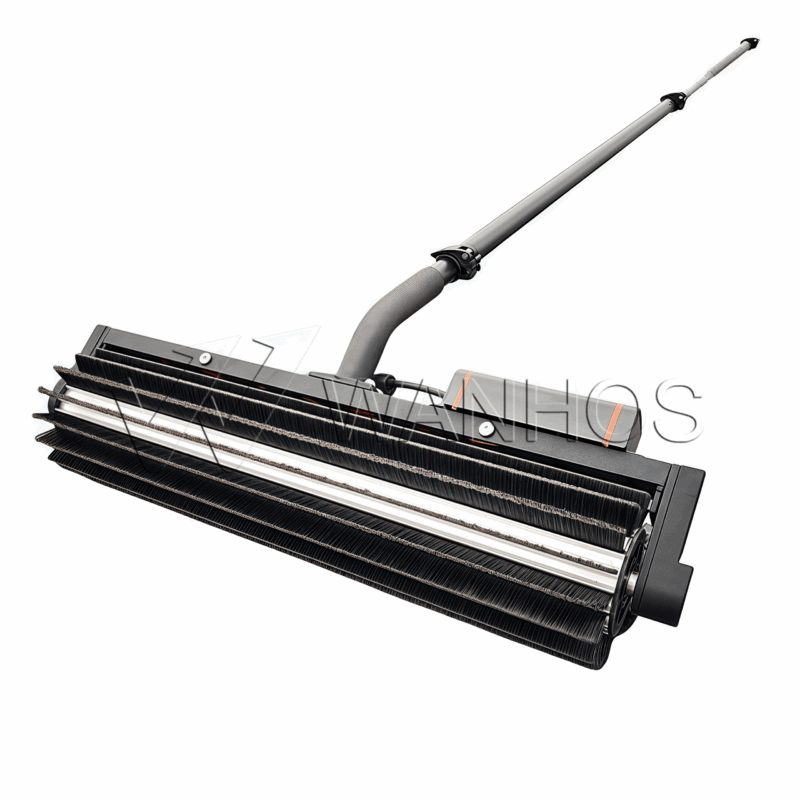
Cleaning machines for solar panels can be broadly categorized by motor type, brush type, and mobility.
- Motor Type: brushless and brushed
| Feature | Brushless Motor Cleaning Machines | Brushed Motor Cleaning Machines |
|---|---|---|
| Design | Uses electronic commutation (no brushes) | Traditional, uses carbon brushes |
| Pros | Longer lifespan, quieter, higher efficiency | Simple, cost-effective |
| Cons | Slightly higher upfront cost | Brushes wear out over time, needs maintenance/replacement |
| Maintenance | Minimal maintenance | Regular brush replacement required |
| Suitability | Large-scale or long-term installations | Small to medium installations |
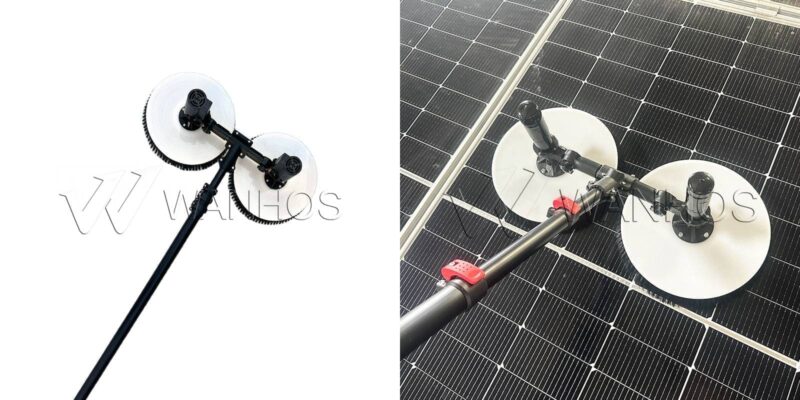
- Brush Type
| Feature | Single-Head Rotary Brush | Dual-Head Rotary Brush | Specialized Brush Materials |
|---|---|---|---|
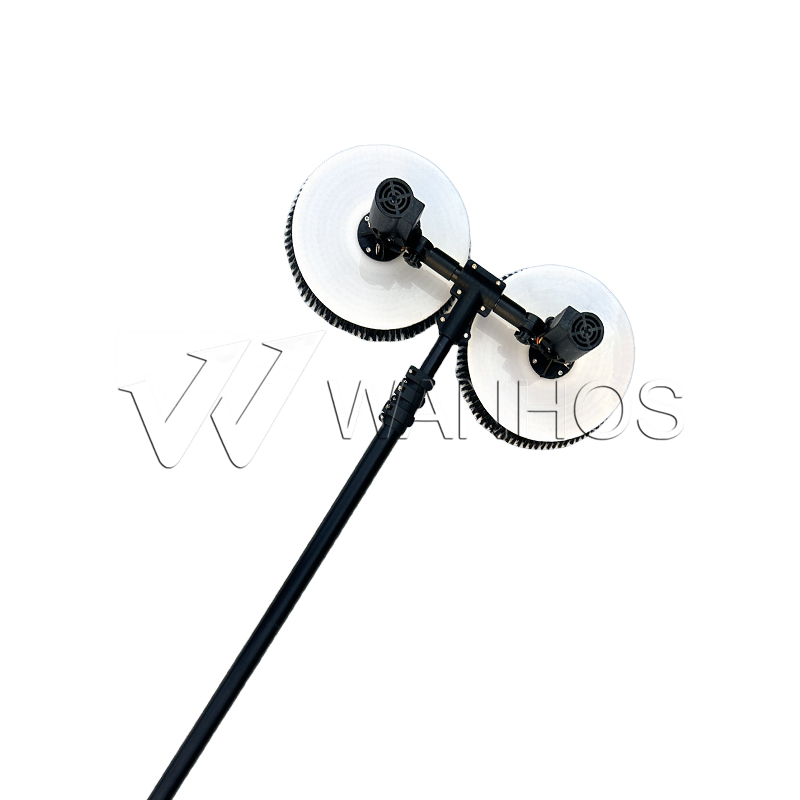
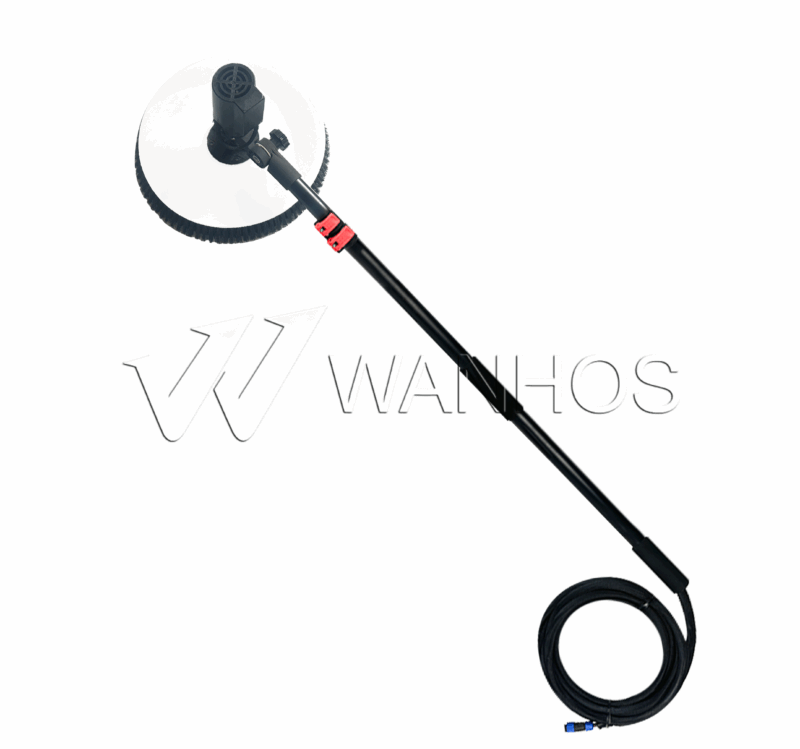
| Design | One rotating brush head mounted on a pole | Two brush heads mounted in parallel | Soft nylon brushes, sometimes with water spray nozzles |
| Coverage | Smaller areas or individual panels | Larger surface area in one pass | Depends on brush size and type |
| Best Use | Small installations, hard-to-reach panels | Long rows of ground-mounted panels, high efficiency | Prevents scratches, improves cleaning quality |
| Mobility / Handling | Lightweight, easy to maneuver | Heavier than single-head but still portable | N/A |
| Additional Notes | Manual operation usually | Manual or semi-automated | Some brushes allow wet cleaning |
Additional Cleaning Considerations
Water Type:
- Use deionized or soft water to prevent mineral deposits.
Cleaning Frequency:
- Varies by environment: dusty or desert areas require more frequent cleaning.
Safety:
- Avoid using high-pressure washers that can damage panels.
- Always follow electrical safety protocols, especially for live systems.
Summary
Choosing the right cleaning equipment depends on the size of the installation, environmental conditions, and budget.
- Small installations: Handheld single or dual-head machines with soft brushes are sufficient.
- Large-scale ground-mounted solar farms: Automated or remote-controlled brushless motor systems provide efficient, low-maintenance solutions.
- Water quality and cleaning frequency: Crucial factors to maintain optimal performance.
By selecting the right equipment and maintaining a regular cleaning schedule, ground-mounted solar panels can operate at peak efficiency, ensuring maximum return on investment.