
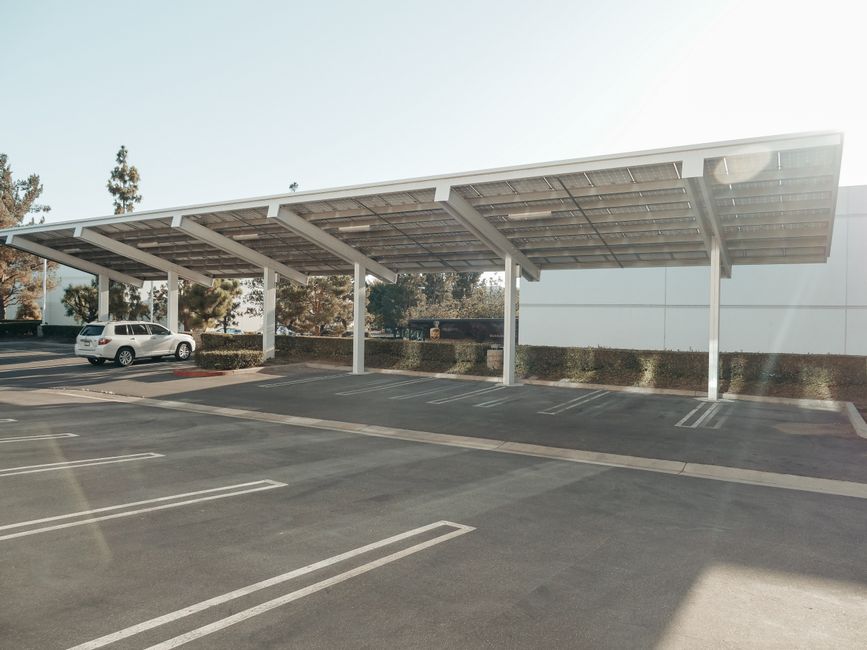
Solar Carport Procurement: Locking Down Structural Details Before Order and Installation
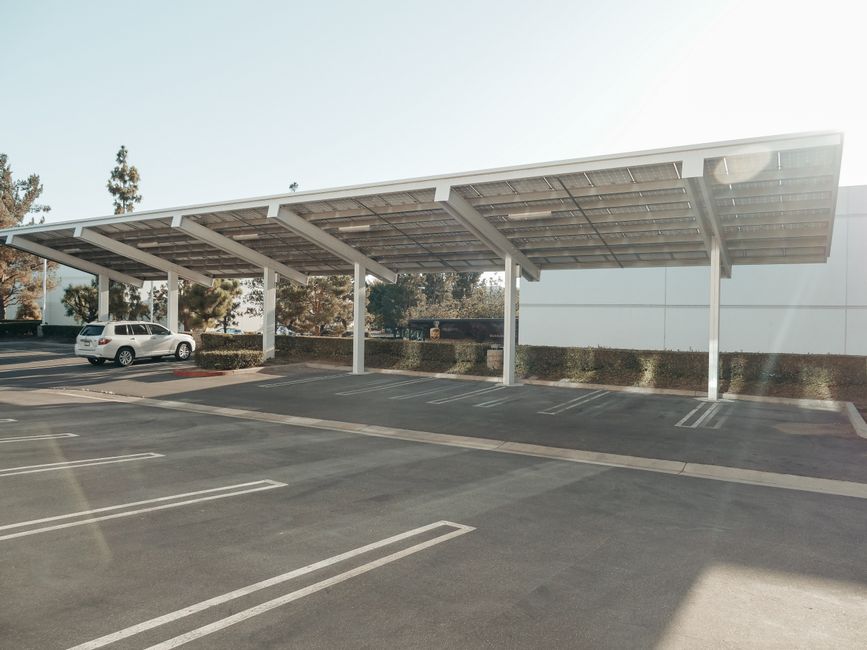
When an EPC contractor moves to order a solar carport, a handful of technical decisions made during the RFQ stage can determine whether the site build stays on track or turns into a cycle of rework, delayed deliveries, and field modifications. The goal is not just to buy a steel frame. The goal is to receive a structure where the column positions match the parking grid, the foundation type fits the geotech report, the rails accept your exact module dimensions, and the coating survives the local climate long enough to pay back the project investment.
This article walks through what actually matters when specifying a solar carport — not from a product brochure perspective, but from the standpoint of someone who has seen where orders go wrong and where small engineering checks prevent large cost overruns.
Getting the Carport Geometry Right from the Parking Layout
Solar carport procurement starts long before the purchase order. It begins with the parking layout drawing. Many a project has received a perfectly fabricated steel structure that could not be bolted together on site because the column spacing did not match the actual parking stall width, or because the cantilever dimensions were specified without considering vehicle overhang and turning radii.
Before you ever send an inquiry to a carport manufacturer, lock down these five numbers:
- Parking stall width and length — usually 2.5 m to 2.75 m wide, 5 m to 5.5 m long, but verify against the actual site markings or design intent.
- Drive aisle width — single-loaded vs. double-loaded parking rows change the cantilever requirement and total steel tonnage.
- Clear height under beam — local fire access and vehicle clearance codes often mandate at least 2.1 m to 2.4 m, sometimes more for truck or emergency vehicle paths.
- Column offset from the parking stall edge — central column placement can interfere with car doors; a column placed at the stall boundary works better for daily vehicle access.
- Module tilt angle and orientation — single-slope canopies (often 5° to 15°) are simpler to fabricate and install than dual-pitch designs, but the choice depends on latitude, snow load, and inter-row shading constraints.
Without these dimensions locked in the inquiry package, the supplier must make assumptions that rarely survive the first site survey. That leads to change orders, fabrication delays, and sometimes structural members that must be cut and re-welded in the field — a practice that compromises the galvanized coating and voids structural warranties.
Steel Fabrication and Coating Choices That Impact Corrosion and Lead Time
Solar carports in B2B projects are almost always hot-rolled steel structures, not aluminum. Steel handles the longer spans and higher bending moments typical of canopies over parking bays. But the way that steel is fabricated, joined, and coated determines whether the structure will need repainting in year seven or stand clean for two decades.
Three procurement decisions around steel matter most:
Hot-Dip Galvanizing vs. Pre-Galvanized vs. Powder Coating
Hot-dip galvanizing (≥80 µm zinc thickness to EN ISO 1461 or equivalent) provides the longest corrosion protection for outdoor carport structures, especially in coastal or industrial environments. Pre-galvanized steel sheet, common in purlins and secondary members, is thinner but acceptable in mild inland climates when combined with mechanical zinc-rich touch-up. Powder coating over steel should never be the only corrosion barrier on a carport primary frame unless the coating system has proven UV and scratch resistance and is specified by an experienced structural engineer for that exact environment.
Bolted Connections vs. Site Welding
At the factory, prefer fully bolted connections wherever possible. Bolted joints allow hot-dip galvanized members to arrive on site with their coating intact. Field welding destroys the zinc layer around the weld zone and requires re-coating that rarely achieves the same protection. Some carport designs use a combination of bolted main joints and small field welding for attachment of cable trays or module rails, but the primary structural connections should never depend on field welding.
Lead Time Reality Check
Hot-dip galvanizing adds 5 to 10 working days to the fabrication schedule, depending on the galvanizer’s bath size and queue. EPC teams that place orders without confirming galvanizer availability often face a two-week gap between raw steel cutting and the moment dipped columns are ready for shipment. If the project schedule is tight, modular carport designs with pre-galvanized C-channel purlins and hot-dip primary columns can compress lead time compared to a fully custom welded-and-dipped frame.
Foundation Selection: Ground Screws, Concrete Piers, or Ballast Blocks
No part of a solar carport installation creates more site variables than the foundation. The right choice depends on soil bearing capacity, frost depth, water table, and whether the parking lot is existing asphalt, new construction, or an unpaved area.
The table below compares three common foundation types for solar carports in a transactional context — that is, what procurement and installation teams need to know before ordering.
| Foundation Type | Best Site Conditions | Procurement Considerations | Installation Speed (per column) |
|---|---|---|---|
| Ground Screw (Helical Pile) | Sandy, clayey, or gravel soils with no large boulders; unmade ground or greenfield sites | Need soil report and pile load test results; screw length and helix size matched to axial and lateral loads; supplier should include installation torque specs and allowable pile head displacement | 15–30 min with hydraulic drive |
| Cast-in-Place Concrete Pier | Areas with high frost depth, poor surface soils, or where ground screws cannot achieve required pull-out resistance | Excavation, formwork, and concrete curing time (typically 7 days minimum before bolting steel) extend the construction window; reinforcement cage and anchor bolt positioning must match carport base plate exactly | Excavation + pour: 2–4 hours; curing: 7 days |
| Precast Ballast Block (with or without mechanical anchoring) | Existing asphalt parking lots where excavation is not allowed; limited soil load capacity or shallow underground utilities | Block weight must be verified against wind uplift calculations for that specific carport geometry and local wind region; blocks add significant transport cost; often used with light steel carport designs | Crane-placed: 10–15 min once on site |
No foundation type is universally cheapest. Ground screws shift cost from concrete and labor to the screw manufacturer and torque machine, but they eliminate excavation and curing time. Concrete piers are well understood by local civil crews but add a non-compressible delay before steel erection begins. The procurement package must include the geotechnical report and wind load data so the mounting supplier can confirm the foundation specification, not guess at it.
Module Rail and Clamp Compatibility: Avoiding Frame Damage and Mismatch
Solar carport structures typically use purlins (horizontal C or Z steel sections) that run perpendicular to the module rows. The aluminum module rails then bolt to these steel purlins, and the modules themselves are secured with mid and end clamps. That sounds simple, but three procurement mistakes happen regularly.
Clamp Slot and Module Frame Thickness Mismatch
Most 60-cell and 72-cell modules now use 30 mm to 35 mm frame heights, but bifacial and large-format modules are shifting toward 30 mm or even 32 mm frames with different glass-to-frame edge geometry. If the clamp grip length, screw thread engagement, and EPDM rubber pad shape are not matched to your specific module model, you risk cracked glass during installation or micro-cracks appearing after the first thermal cycle. Always include the module datasheet and the frame cross-section drawing in the carport RFQ.
Thermal Expansion Over Long Carport Bays
A 30-meter-long aluminum rail without an expansion joint can impose unintended stress on module frames as the aluminum expands and contracts under daily temperature swings. On steel purlins, the thermal expansion difference between aluminum rails and steel purlins is small but not zero. Carport designs with continuous rails exceeding 12–15 meters should include sliding joints or slotted rail connections to accommodate movement without stressing the glass. Ask the mounting supplier how and where expansion is accounted for in their rail layout.
Earthing and Bonding Continuity
Hot-dip galvanized steel frames and aluminum rails form a galvanic couple in the presence of moisture. Stainless steel washers and bonding jumpers must be engineered to maintain grounding continuity without accelerating corrosion at the steel-aluminum interface. Pre-installed grounding clips or integrated bonding points on the rail system reduce field labor and ensure every connection point meets the project’s earthing design. If the carport structure relies on the steel frame as the primary ground path, the supplier should provide a bonding plan that accounts for every bolted joint and the protective coating.
Pre-Assembly and Pre-Cabling: Where Factory Work Can Cut Site Labor by Days
For EPC teams focused on installation speed, the carport procurement specification should go beyond bare steel. Modular carport kits that include pre-assembled purlin-to-column connection brackets, pre-drilled cable tray attachment points, and factory-installed rail connectors can reduce site labor significantly. Under typical site conditions, a carport structure with pre-assembled components can be erected by a small crew in about half the time of a traditional loose-steel approach.
If the budget allows, consider requesting:
- Pre-galvanized cable trays integrated into the purlin design, so electricians do not need to drill the structure on site.
- Factory-bonded EPDM gaskets on rail seats, eliminating the need to separately position and align rubber pads during module installation.
- Pre-assembled clamp sets with torque indicators, reducing the risk of under-torque (loose modules under wind load) or over-torque (frame deformation).
These items add a small amount to the ex-works price but often pay back double in saved installation man-hours. When requesting quotes, ask the supplier to separate the base steel structure cost from the pre-assembly options so you can evaluate the labor trade-off directly.
FAQ: Real Questions from Solar Carport Buyers
What wind load standard should a solar carport be designed to?
The carport must comply with the structural code used in the project country — for example, Eurocode 1 (EN 1991-1-4) for wind actions, AS/NZS 1170.2 in Australia, or ASCE 7 in the United States. Wind tunnel coefficients are preferred over generic canopy coefficients because the ratio of canopy height to width and the presence of adjacent buildings drastically change the net pressure on the roof. Never accept a carport design that uses a single global wind pressure number without local terrain category input.
How do I know if ground screws will work on my site?
You need a geotechnical investigation that reports soil type, SPT N-values, and groundwater level down to at least the intended screw embedment depth. A reputable ground screw supplier will then run pull-out and lateral load calculations based on that data, and ideally provide a site-specific pile load test report before full production. Without that, you risk screw refusal during installation or foundations that drift under lateral wind load.
What is the difference between a solar carport with single-slope and dual-pitch canopy?
A single-slope canopy (one tilted plane) is simpler to fabricate, uses less steel, and drains water to one low edge. It suits latitude ranges where module tilt is below 15°. A dual-pitch (gable or butterfly) design looks more like a traditional carport and can handle higher snow loads by directing snow and water to both sides, but it increases steel weight and fabrication complexity. Choose based on structural loading first, not visual preference.
Should I order the carport structure and modules from the same supplier?
Not necessarily, but the module frame specifications must be shared with the carport supplier, and the carport rail layout should be confirmed by the module manufacturer to avoid warranty issues related to mounting. Some mounting system manufacturers, including Wanhos, accept module datasheets directly and match the clamp and rail system to those frames, which reduces coordination risk between separate orders.
How long before installation should I place the carport order?
For a custom hot-dip galvanized structure, plan on 8–12 weeks from order to delivery, depending on steel availability and galvanizer schedules. Pre-engineered modular carport systems with standardized column and purlin dimensions can sometimes be shipped in 6–8 weeks, but always confirm the current lead time at the time of quotation, as steel mill production and shipping fluctuate.
Before You Order: Final Field Notes for EPC Teams
A solar carport procurement package that avoids site surprises includes at minimum: the parking layout with all critical dimensions, the geotechnical report, the wind design code and basic wind speed, the module datasheet with frame drawing, and a clear preference on foundation type. Sending an inquiry without these is like asking for a price on a “steel frame” — you will get a number, but it will not be the one that holds up on site.
At Wanhos, we design and supply solar carport mounting structures to EPC contractors and developers across multiple regions. Our engineering team works from your site conditions and module selection to deliver a structure where columns, purlins, rails, and clamps arrive as a matched system — not a collection of steel pieces that need re-engineering on the back of a site drawing. When you share your project drawings, wind load, soil report, and module specs, we return a technical proposal with bill of materials, foundation loading data, and installation sequence guidance that lets your site team build without guesswork.
If your project is entering the procurement stage, contact Wanhos with your requirements and we will provide a carport solution that matches the loads, the parking geometry, and the installation window.