Complete Solar Mounting Hardware Set: Avoid Missing Parts That Delay PV Projects

Nothing frustrates an installation crew faster than opening boxes at 7:00 AM and realizing mid-rail splice bolts are missing, or that the mid clamps don’t match the module frame thickness ordered three weeks ago. A mounting structure that is 95% complete is still unusable. In solar PV projects, “hardware set” isn’t just a packaging term—it’s a field-readiness promise. When that promise breaks, labor stands idle, small parts get sourced locally at a premium, and the project timeline slides. This article explains what should actually be inside a complete solar mounting hardware set, where the missing parts usually hide, and how EPCs and buyers can verify completeness before the first pallet leaves the warehouse.
What Actually Goes Into a Complete Mounting Hardware Set
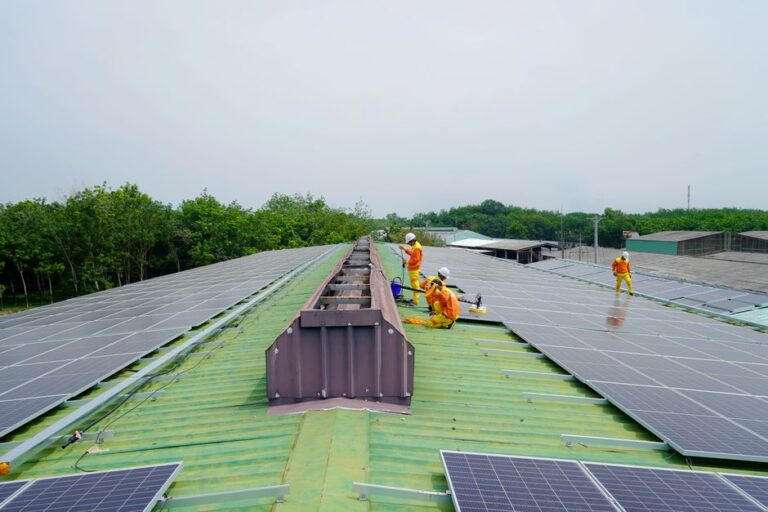
A hardware set does not stop at rails. For a roof-mounted system on a trapezoidal metal roof, the set should include L-feet with EPDM seals, pre-assembled rail mounting bolts, rail splices, end clamps, mid clamps, module grounding lugs or integrated clamp pins, and all matching self-tapping screws or hanger bolts required to fix the L-foot to the roof sheet. A ground-mount set on helical piles adds base plates, U-bolts or saddle brackets, and cross-rail connectors. If the system uses a rail-less design, the hardware set shifts toward module-integrated clamps, earthing jumpers, and specialized roof anchors. The common mistake is to treat small fasteners as commodity items. In a properly engineered hardware set, even the washers—flat stainless steel, with correct diameter to distribute clamp force—are specified, not randomly packed.
Clamps and their silent compatibility job
Mid and end clamps must match the module frame height exactly. A clamp rated for a 30 mm frame will not grip a 35 mm frame securely under wind uplift, and adding a rubber shim is not an engineered fix. A complete hardware set provides clamps that have been verified for the specific module data sheet, including frame tolerance and glass-edge clearance. When projects mix module brands, the hardware set may need two different clamp heights. That needs to be flagged during procurement, not discovered on the roof.
The Real Cost of Missing Hardware on Site
One missing bolt can halt a 4-person installation crew. If that bolt is a specific M8×25 stainless hex flange bolt with a nylon patch for vibration resistance, the site supervisor cannot just pick it up from a local hardware store. The time lost is not just the bolt’s cost. It’s the labor hours, the mobile scaffold rental, the delayed grid connection, and the morale hit. Over dozens of residential or C&I installations, incomplete hardware sets become a predictable margin eater. We’ve seen projects where 2% of mid clamp bolts were missing, but the crew didn’t notice until the pallets were empty and modules were half-laid. That kind of gap is fixable only by courier delivery, which erodes the project’s installation efficiency and trust in the supplier.
Why Generic Kits Often Fall Short for Commercial Projects
Many distributors sell standard “universal” hardware kits that cover a range of roof types. For a single-family home with a simple pitched roof, this may work. For a 500 kW commercial rooftop with multiple roof zones, varying rafter spacing, and a mix of module orientations, a generic kit becomes a risk. The additional L-feet needed for edge zones with higher wind pressure are rarely included. Extra rail splices for long rows are missing. Earthing continuity components that satisfy local regulations might be absent. A complete hardware set for a commercial project must be calculated against the structural layout drawing, not pulled from a catalog pick list. That calculation is what separates a mounting system manufacturer’s project-specific package from an off-the-shelf box.
How to Verify a Hardware Set Before It Leaves the Warehouse
Experienced procurement engineers don’t just trust the packing list. They ask for a bill of materials (BOM) per shipment, broken down by pallet or box, and cross-check it against the structural drawing’s component count. A simple way to test completeness is to ask: if I gave this set to a new installation team with no prior knowledge of the project, would they have everything to finish the installation and pass a structural inspection? If the answer is “they would need some extra cable ties” or “they’d have to source earthing jumpers locally”, the set is incomplete. Smart buyers also request a photo of a sample pallet layout before dispatch. This catches mismatched packaging, like mid clamps packed in a separate box that can be overlooked.
Material Choices That Affect Long-Term Performance
A hardware set’s service life depends heavily on the fastener and structural material combination. In non-coastal environments, zinc-plated carbon steel bolts might be acceptable for some projects, but they carry corrosion risk if the coating is scratched during installation. For most solar mounting systems designed for 25-year service life, the hardware set should use SUS304 stainless steel bolts, nuts, and washers as a minimum. AL6005-T5 aluminum rails and clamps provide good corrosion resistance, but when they contact stainless steel fasteners, the galvanic couple must be managed. A well-specified set includes nylon-coated washers or isolators at critical contact points in coastal zones where salt spray accelerates galvanic corrosion. These small components—often just a fraction of the total cost—make a difference between a maintenance-free array and one that shows white rust around bolts after two monsoon seasons.
Engineering Tip: Galvanic Corrosion and Drainage
When aluminum rails are bolted directly to hot-dip galvanized steel roof anchors without isolation, the zinc coating can be sacrificed faster than expected. A thin EPDM gasket or nylon washer between dissimilar metals is a low-cost addition that changes the long-term corrosion pattern. Also, check that hardware like U-bolts or clamp assemblies do not create water traps where debris accumulates. Good drainage detail in the hardware design prevents standing moisture, which accelerates pitting even on stainless fasteners.
Pre-Assembled vs. Loose Components: Installation Time Trade-Offs
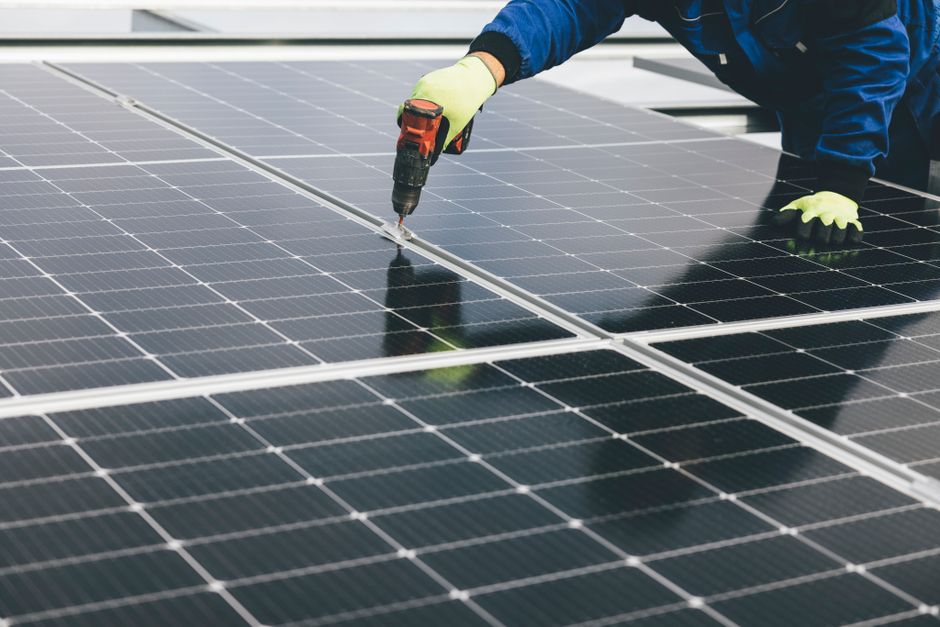
The hardware set can arrive as a bucket of loose bolts, nuts, and washers, or as pre-assembled clamp units where the bolt and nut are already threaded into the clamp body. The difference shows up in installation speed. When a crew must manually match every M8 bolt with a flat washer, spring washer, and nut for hundreds of mid clamps, small parts get dropped, lost, and cross-threaded. Pre-assembled hardware reduces on-roof assembly steps and keeps the installation pace consistent. It also reduces the risk of forgetting a washer, which can compromise clamping force under thermal cycling. The trade-off is that pre-assembled kits are slightly more expensive in upfront material cost, but the labor saving and reduced error rate often more than offset that in projects above 100 kW.
| Component Type | Loose Hardware Kit | Pre-Assembled Hardware Set (Wanhos Style) |
|---|---|---|
| Mid clamp installation | Separate bolt, nut, washers; installer assembles on site | Bolt pre-threaded into clamp body; single torque operation |
| Risk of lost/wrong parts | Higher; small hardware easily misplaced | Lower; fewer separate pieces per connection |
| Installation speed per MW | Slower due to component handling | Faster, especially for large repetitive arrays |
| Inventory management | Simpler to stock spare parts individually | Requires dedicated clamp SKUs but reduces site sorting |
| Project suitability | Small rooftop, short timelines less critical | Commercial and utility where labor cost drives decisions |
The right choice isn’t always one or the other. For small systems, a loose hardware kit is still manageable if the packing is clearly separated per bay. For anything above 50 kW on a single roof, the pre-assembled approach starts to look like the faster, lower-risk option.
Questions to Ask Your Supplier Before You Order
Before finalizing a purchase, procurement engineers should push beyond the data sheet. Ask these five questions:
- Is the hardware set tallied against my specific module frame and layout drawing, or is it a standard package? A project-specific tally reduces surplus and shortages.
- Are the fasteners SUS304 or 316? What documentation confirms the grade? For coastal installations, 316 stainless may be necessary; verify with test certificates.
- Does the set include earthing continuity components, or do I need separate grounding kits? Some jurisdictions require integrated bonding; missing these can fail inspection.
- How are the small parts packed? Individually sealed bags per row, or mixed bins? Segregated packing by installation step saves hours on site.
- If I find a missing item upon delivery, what is the replacement lead time? The answer reveals whether the supplier stocks components locally or ships from overseas.
Wanhos Complete Hardware Set Approach for Project Reliability
When Wanhos supplies a mounting system, the hardware set is treated as a structural bill of materials, not an afterthought. For a trapezoidal sheet roof project, the set includes the exact number of L-feet with integrated EPDM seal, pre-assembled mid and end clamps sized to the module’s 35 mm frame, rail splices with alignment pins, and SUS304 hex flange bolts with anti-loosening nylon patches. Each pallet is packed with a component checklist tied to the layout zones, so the site supervisor can cross-check within minutes of delivery. This approach doesn’t eliminate human error, but it dramatically reduces the “missing bolt” phone calls that drain project momentum.
FAQ: Complete Solar Mounting Hardware Set
What is included in a complete solar mounting hardware set?
It includes all structural parts to fix modules to the mounting structure: rails or rail-less components, L-feet or roof anchors, mid and end clamps, splice connectors, all required bolts, nuts, washers, and earthing parts appropriate for the roof type, module frame, and design wind load. Small items like EPDM gaskets and nylon anti-corrosion washers should be included and not treated as optional.
Why does my solar mounting kit often miss small bolts or washers?
Many kits are packed by weight or by rough estimation rather than by project-specific BOM. If the supplier assembled a generic kit for a range of rafter spacings, they may undercount L-feet or splice bolts. It’s also common that earthing components are sold separately and overlooked. Always request a BOM tallied against your structural layout.
How can I check clamp compatibility with my module frame before ordering?
Compare the clamp working range (usually 30–40 mm or 35–50 mm) with the module data sheet’s frame height. Also check the clamp gripping area: some thin-film modules require wider clamps. Reputable mounting suppliers will confirm compatibility if you provide the module make and model ahead of ordering.
Is stainless steel always necessary in a hardware set?
For outdoor photovoltaic systems with a 20–25 year design life, stainless steel (SUS304 minimum) is strongly recommended for fasteners. In coastal or high-humidity areas, SUS316 may be justified. Hot-dip galvanized bolts can be used in dry inland climates, but scratched zinc coatings become corrosion initiation points.
Can I mix aluminum and steel fasteners in the same mounting system?
Mixing aluminum structural components with stainless steel fasteners is standard practice, but you must manage the galvanic interface. Include nylon or EPDM isolation washers at direct contact points, especially where aluminum rails meet galvanized steel roof anchors. Without isolation, the less noble metal will corrode faster in the presence of moisture.
Before You Send a Quotation Request
A complete solar mounting hardware set is not a one-size-fits-all SKU. It’s a project-specific package that must be aligned with the module specifications, roof survey data, wind load zone classification, and local earthing requirements. Missing components are rarely resolved without cost and delay. If you’re specifying or ordering mounting hardware for an upcoming installation, it pays to work with a supplier that builds the BOM around your structure, not around a warehouse bin. Wanhos provides project-matched hardware sets for roof, ground, carport, and balcony PV systems, with detailed packing lists and pre-assembled components that help crews install faster and with fewer interruptions. When you’re ready, send your module layout, roof type, and site wind parameters—our engineering team will prepare a hardware set that matches the real site, not a generic guess.