Commercial Solar Carport: What EPC Teams Need to Know Before Specifying the Structure
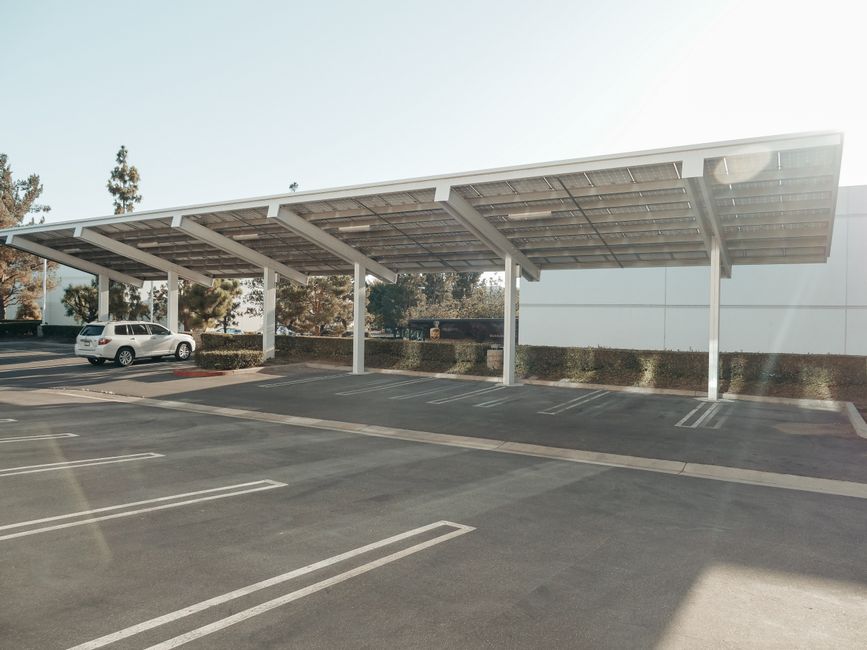
If you are evaluating a solar carport for a commercial parking lot, the core question is not whether solar panels can be mounted overhead. The real question is how to balance structural cost, installation speed, parking layout constraints, and long-term corrosion resistance under a single system. A solar carport is a dual-purpose structure that provides weather protection for parked vehicles while generating electricity, but the mounting frame design, foundation choice, and module orientation directly affect project payback. For commercial installations, the mounting structure typically represents 15–25% of total project cost, and mistakes in structural specification can delay installation, increase labor, or lead to future maintenance issues.
Key Takeaways for Commercial Solar Carport Projects
- For commercial parking lots, the mounting structure must accommodate larger module formats and higher wind uplift loads than residential carports. Rail span, column spacing, and foundation design should be verified against local wind and snow codes before procurement.
- Material selection between hot-dip galvanized steel and aluminum alloy (AL6005-T5) depends on site environment. Steel offers higher strength for longer spans but requires thicker corrosion protection. Aluminum is lighter and corrosion-resistant but may need closer column spacing for equivalent load capacity.
- Installation labor efficiency is directly influenced by pre-assembly level. Systems with pre-assembled clamps, pre-cut rails, and standardized connection interfaces can reduce on-site assembly time by 15–25% compared with fully loose-component carport kits.
Structural Design Considerations for Commercial Solar Carports
Commercial solar carports are fundamentally different from roof-mounted systems. The structure must be self-supporting, designed to withstand wind uplift from underneath, and capable of spanning parking bays without obstructing vehicle movement. Typical column spacing ranges from 5 to 8 meters depending on local wind loads, snow loads, and the structural rating of the chosen profile.
Wind uplift is often the governing load case for carports. Unlike roof mounts where panels sit close to the building envelope, carport panels are exposed to airflow from both sides. For sites in open terrain or coastal regions, uplift pressures can exceed 1.5 kPa, requiring heavier profiles, closer purlin spacing, or additional ballast at column bases. Always verify the design against AS/NZS 1170.2, Eurocode 1, or ASCE 7 depending on project location. Do not rely on generic load tables without confirming site-specific parameters.
Column and Foundation Interface
The connection between the carport column and foundation is a common weak point in poorly designed systems. Bolted base plates on concrete footings are standard for commercial projects. The footing size depends on soil bearing capacity, column spacing, and wind overturning moment. For sites with soft soil, ground screws or helical piles can reduce concrete volume and speed installation, but they require geotechnical verification. For projects where soil conditions are variable, a concrete foundation with cast-in anchor bolts provides more predictable load transfer.
Engineering Tip: When specifying column base plates, ensure that anchor bolt placement allows for minor on-site adjustment. A tolerance of ±10 mm in bolt positioning avoids re-drilling on site, which is one of the most common delays during carport installation.
Material Comparison: Aluminum vs. Steel for Solar Carport Frames
The choice between aluminum and galvanized steel affects cost, corrosion resistance, and structural span. Below is a practical comparison based on typical commercial carport projects.
| Parameter | AL6005-T5 Aluminum | Hot-Dip Galvanized Steel |
|---|---|---|
| Corrosion resistance | Excellent in coastal and high-humidity environments without additional coating | Good, but coating integrity matters. Cut edges and weld zones require touch-up |
| Typical column spacing | 5–6 meters for standard commercial loads | 6–8 meters for equivalent load capacity |
| Weight per meter | Approximately 35% lighter than equivalent steel profile | Heavier, requiring larger foundations for same span |
| Installation labor | Easier handling with smaller crew, but requires torque control on bolted connections | Heavier sections may require lifting equipment for assembly |
| Project cost | Higher material cost, lower installation cost, longer service life in coastal zones | Lower material cost, higher transport and foundation cost, shorter coating life in aggressive environments |
| Best suited for | Coastal sites, humid climates, projects with faster installation priority | Inland sites, large-span applications, budget-constrained projects |
In practice, hybrid systems are also available where aluminum rails support the modules and steel columns provide the main structure. This approach can balance cost and corrosion resistance, but galvanic corrosion between dissimilar metals must be addressed with isolation washers or nylon gaskets at connection points.
Module Layout and Orientation Decisions
Commercial solar carports typically use a flat or low-tilt design, with tilt angles ranging from 5 to 15 degrees for optimal energy yield without excessive structure height. A tilt of 10 degrees is common for most mid-latitude commercial sites. Higher tilts improve self-cleaning from rainfall but increase wind loading and material cost.
For parking lot layouts, orientation is usually east-west for canopies covering multiple rows, or south-facing for single-row carports. East-west carports with modules on both sides of the ridge allow more panels per parking space but require careful drainage design to avoid water pooling at the ridge. Module layout should also consider thermal expansion. Aluminum rails expand approximately 2.3 mm per 10 meters per 100°C temperature change. For long carport rows, expansion gaps or sliding connections at rail joints prevent buckling or fastener loosening.
Installation Workflow and Labor Efficiency
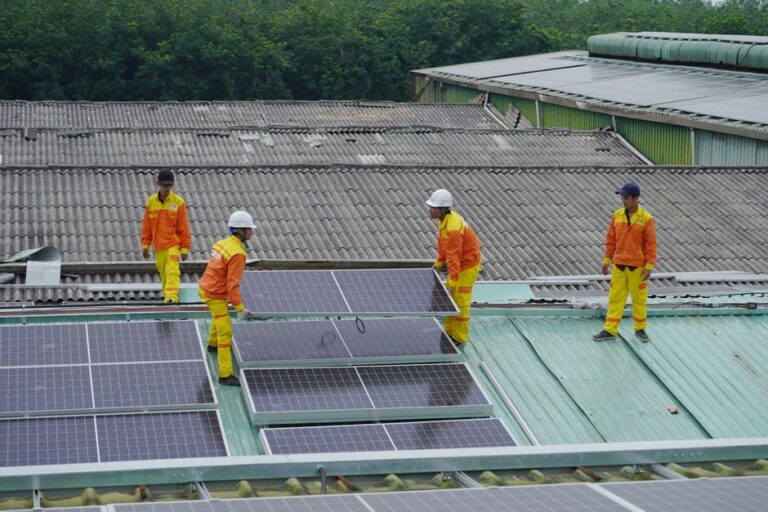
For commercial carport projects, site assembly time directly affects project profitability. The installation sequence typically follows: foundation preparation, column erection, main beam and purlin assembly, module mounting, and electrical wiring. The mounting structure phase often accounts for 30–40% of total installation labor.
Pre-assembled components can reduce this significantly. Systems with pre-drilled rails, pre-assembled mid and end clamps, and standardized connection brackets eliminate on-site measuring and cutting. For a typical 100 kW commercial carport, using a pre-assembled mounting system can save 40–60 person-hours compared with conventional loose-component installation. This is especially valuable for projects with tight schedules or limited crane availability.
Common Installation Mistakes to Avoid
- Not verifying rail span against module manufacturer specifications. Over-spanning causes module glass stress and potential breakage under snow load.
- Inadequate torque on column base plate bolts. Loose anchor bolts lead to column movement under wind load and eventual alignment issues.
- Ignoring grounding continuity. Carport structures require bonding between all metallic components. Missing ground straps between rail sections can create safety hazards during lightning events.
Maintenance and Long-Term Performance
Solar carports require less maintenance than roof systems because they are ground-accessible, but they also face unique exposure. The underside of panels and structure is often exposed to vehicle exhaust, dust, and bird nesting. Annual inspection should include checking fastener torque, examining corrosion at column bases and connection points, verifying grounding continuity, and clearing drainage channels at the ridge or gutter sections.
For coastal projects, pay special attention to stainless steel fasteners. SUS304 is standard for most environments, but SUS316 offers better resistance in salt spray zones. If galvanic corrosion is observed between aluminum rails and steel columns, the isolation gaskets should be inspected and replaced if degraded.
FAQ: Commercial Solar Carport Buyers and Installers Often Ask
What is the typical cost range for a commercial solar carport structure?
Structure-only cost, excluding modules and electrical, typically ranges from USD 0.25 to USD 0.50 per watt depending on material, span, and corrosion protection level. Steel systems are at the lower end, aluminum at the higher end. Foundation cost adds another USD 0.10 to USD 0.20 per watt depending on soil conditions.
How do I choose between a ground screw and concrete foundation for a carport?
Ground screws are faster to install and avoid concrete curing time, but they require geotechnical testing. Concrete foundations are more predictable for variable soil and provide higher overturning resistance for tall carports. For sites with high water tables or soft clay, concrete is generally preferred.
Can a solar carport be retrofitted to an existing parking lot?
Yes, but the existing pavement condition and underground utilities must be assessed. Concrete footings can be core-drilled through asphalt, but reinforcement and base thickness must be verified. Retrofitting often adds cost for pavement cutting and restoration.
What wind speed should a commercial carport be designed for?
This depends on local building codes. In common commercial zones, design wind speeds range from 35 m/s to 50 m/s (3-second gust). For exposed coastal or high-wind regions, higher values apply. Always use site-specific wind data, not generic assumptions.
How long does a solar carport mounting structure last?
With proper material selection and maintenance, aluminum structures can exceed 30 years service life. Hot-dip galvanized steel typically lasts 20–25 years in inland environments, but coating life decreases in coastal zones. Regular inspection and touch-up of damaged coating extends steel structure life.
Project Recommendation for EPC Teams
When specifying a commercial solar carport, start with site conditions: wind zone, soil type, and environmental corrosivity. Then define column spacing based on parking bay dimensions and module size. Choose material based on corrosion exposure and budget, but do not underestimate labor savings from pre-assembled components. For projects requiring both structural reliability and installation efficiency, Wanhos offers aluminum and hybrid carport systems with pre-drilled rails, integrated grounding, and standardized connection interfaces. Contact Wanhos with your project drawings, module size, wind load requirements, and site location for a mounting structure recommendation that matches your commercial installation workflow.