How to Stop Corrosion on Aluminum
Aluminum is widely used in industries such as construction, transportation, and renewable energy due to its lightweight properties, high strength-to-weight ratio, and natural resistance to corrosion. However, while aluminum performs better than many metals in harsh environments, it is not completely immune to corrosion. Understanding how to protect aluminum from degradation is essential for maintaining performance and extending service life.
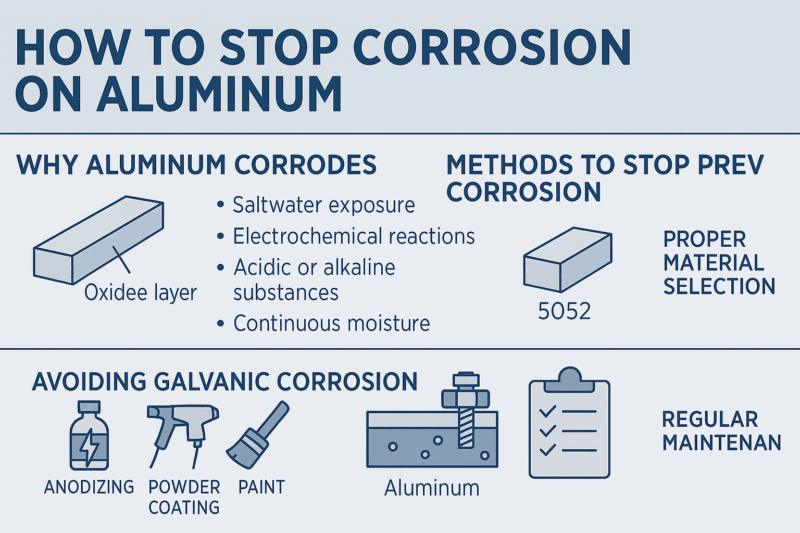
Why Aluminum Corrodes
Aluminum resists corrosion better than steel because it naturally forms a thin oxide layer on its surface when exposed to air. This oxide layer acts as a protective barrier.
However, under certain conditions, corrosion can still occur:
- Saltwater exposure (e.g., marine environments)
- Electrochemical reactions (contact with dissimilar metals)
- Acidic or alkaline substances
- Continuous moisture accumulation
When these factors compromise the oxide layer, localized corrosion such as pitting or galvanic corrosion may develop.
How To Stop Corrosion On Aluminum
Surface Coatings
Applying protective coatings creates a physical barrier between aluminum and the environment:
- Anodizing: An electrochemical process that thickens the natural oxide layer for improved corrosion resistance.
- Powder Coating: A durable polymer finish that protects against UV rays, chemicals, and moisture.
- Paint Systems: Industrial paints formulated for metal surfaces can provide both protection and aesthetics.
Proper Material Selection
Choosing the correct aluminum alloy for the operating environment is crucial.
- Marine-grade alloys (e.g., 5052, 6061, 6063) offer better corrosion resistance in saltwater.
- Alloys for industrial applications should be matched to expected chemical exposure and mechanical requirements.
Avoiding Galvanic Corrosion
When aluminum comes into contact with a more noble metal (like copper or stainless steel) in the presence of an electrolyte (e.g., water), galvanic corrosion can occur.
Prevention tips:
- Use insulating gaskets or washers between dissimilar metals.
- Apply protective sealants where contact is unavoidable.
Regular Maintenance
Routine inspection and cleaning help maintain the protective oxide or coating layers:
- Remove dirt, salt deposits, or chemical residues with mild detergents.
- Inspect for scratches or coating damage and repair promptly.
Applications in Solar Mounting Systems
In solar racking systems, aluminum components are often exposed to outdoor conditions for decades. To ensure durability:
- Anodized aluminum profiles resist corrosion in diverse climates.
- Stainless steel fasteners with proper insulation reduce galvanic risks.
- Regular inspection during maintenance extends system lifespan.
Conclusion
Given aluminum’s widespread industrial use, solving how to stop corrosion on aluminum becomes a critical issue. Stopping corrosion on aluminum involves protection, correct material choice, isolation from reactive metals, and consistent maintenance. With these strategies, aluminum components — whether in solar mounting systems, marine equipment, or architectural structures — can retain strength and appearance over many years.
At Wanhos Solar, our aluminum mounting systems are designed with anodized finishes, corrosion-resistant fasteners, and engineering expertise to ensure long-term reliability, even in challenging environments.