Solar Pergola: How to Select the Right Mounting Structure for Your Project

When a client asks for a solar pergola, they usually want more than a standard carport or ground mount — they want an architectural statement that integrates PV panels cleanly. But from a mounting system perspective, the pergola is still a structure that must handle wind uplift, drainage, and long-term corrosion without constant maintenance. Before you specify or order a solar pergola kit, a few engineering checks can prevent site surprises. Here’s what matters, from an installer’s and procurement viewpoint.
What Makes a Solar Pergola Mounting System Different?
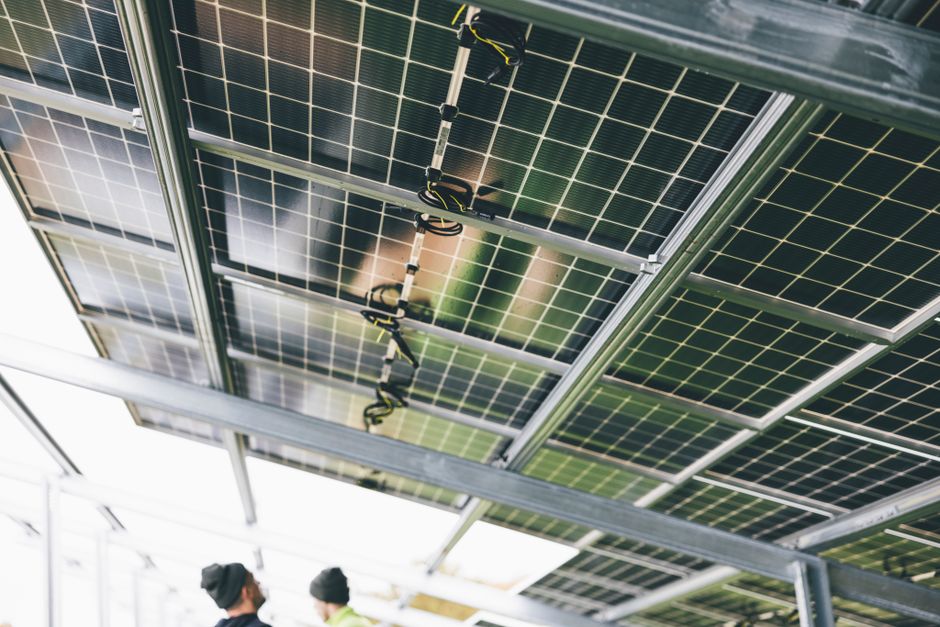
A solar pergola isn’t just an elevated array. The mounting structure typically forms the aesthetic ceiling of an outdoor space — parking, patio, or walkway. That means the support system must perform structurally while maintaining clean sight lines, water drainage, and sometimes even partial shading. Unlike ground mounts, pergola structures often use wider spans to reduce column count, requiring heavier profiles or reinforced beams. The module layout must allow rain to drain off edges, not into the occupied space below. And because the structure is highly visible, fastener head style, profile finish, and connection plate design influence the final architectural look. From an EPC angle, it’s a hybrid between a carport and a canopy, demanding both structural verification and visual integration.
Engineering Factors That Determine Pergola Safety
Even if a pergola appears lightweight, wind uplift becomes the dominant load case. Modules act like a sail in exposed locations. Here are the main design checks that should be part of any procurement or quotation process:
- Wind uplift verification: Pergola open sides mean less wind shielding. Base connection design (ground screws, concrete anchors, or ballast) must resist uplift. Projects in cyclone-prone zones need dynamic load checks according to regional codes (AS/NZS 1170, Eurocode, etc.).
- Snow load consideration: Even a pergola can accumulate snow, especially if modules are mounted with tight tilt angles. Beam deflection must stay within limits to avoid module micro-cracking.
- Span-to-column ratio: Wide spans reduce columns but increase beam size and cost. Overly long spans can cause vibration under wind, leading to fastener loosening. A 4–5 m span with AL6005-T5 extrusions is common; longer spans often require steel reinforcements.
- Thermal expansion: Aluminum profiles expand and contract with temperature. Slotted connections or sliding brackets prevent stress accumulation at fixed points, especially for pergolas over 10 m in length.
- Drainage path: Rainwater can sheet off module arrays. If not channeled, it dumps onto people below. Integrated gutter systems or tilt design that directs water to edges is non-negotiable for user comfort.
Engineering Tip: Foundation Selection for Pergolas
Unlike rooftop, pergolas need their own foundations. Ground screws work well in stable soils and avoid concrete, but require geotechnical evaluation — soft or rocky ground can cause installation issues. Concrete footings provide heavy uplift resistance but increase project time and cost. The decision often hinges on soil report availability and local permitting rules. For temporary or carport-style pergolas, on-grade ballast blocks can work, but must be calculated for the site’s 50-year wind speed.
Material Choices for Long-Term Durability
Solar pergola frames usually use either aluminum alloys (AL6005-T5) or hot-dip galvanized steel. Each has trade-offs:
| Factor | Aluminum (AL6005-T5) | Hot-Dip Galvanized Steel |
|---|---|---|
| Corrosion resistance | Naturally good, suitable for most environments except extreme industrial chemicals | Sacrificial zinc layer; thickness (typically 55–85 μm) determines service life. Edges after cutting must be touched up. |
| Weight | Lighter, easier handling, less foundation demand | Heavier, may require lifting equipment for large spans |
| Cost | Higher material cost, but lower handling and maintenance | Lower upfront material cost, but higher maintenance potential in coastal zones |
| Installation flexibility | Extruded profiles allow integrated channels for bolt sliding and wiring | Often requires additional drilled plates for connections |
| Typical applications | Residential, aesthetic commercial, coastal | Large industrial canopies, budget-sensitive projects |
Wanhos standard pergola structures prioritize AL6005-T5 profiles with SUS304 stainless steel fasteners. In coastal or high-humidity sites, this combination reduces long-term rust risks and maintains appearance. For projects where cost is a stronger driver, hot-dip galvanized steel frames are available but always require specifying coating thickness and edge protection methods.
Installation Workflow and On-Site Efficiency
Pergola installations differ from standard ground mounts because vertical clearance and appearance demand more precise alignment. A typical high-quality kit arrives with pre-cut beams, pre-drilled connection plates, and tested clamp interfaces. Without those, site labor can double.
Key efficiency factors:
- Pre-assembled beam-to-column connectors: Reduce welding or complex on-site drilling. Wanhos connectors are designed for bolted assembly with designed torque values, eliminating hot work permits.
- Module clamp compatibility: Clamps must match the module frame height (30–40 mm typical) and be positioned at approved module clamping zones. Using universal clamps without checking frame specs can lead to edge pressure damage.
- Earthing continuity: For metal pergolas, bonding all aluminum parts with stainless steel grounding clips or copper straps ensures electrical safety. This must be planned before assembly, not retrofitted.
- Column leveling: Even slight unevenness at the base affects beam alignment and panel gaps. Adjustable base plates or shim systems speed up leveling on site.
Installation crew experience with canopies helps, but a well-engineered mounting kit can make the difference between a 2-day and a 5-day build for a 30-panel residential pergola.
Key Specifications to Prepare Before Quotation
When you request a solar pergola quote from a mounting supplier, the following information avoids back-and-forth and ensures the proposal matches your site conditions:
- Project location (for wind/snow load code reference)
- Module dimensions and brand, including frame thickness
- Desired tilt angle (often 5–15° for pergolas, but flat layouts possible)
- Number of rows and columns
- Available ground space and any height restrictions
- Soil condition report if using ground screws
- Prefinish preference (mill finish, anodized, or powder coated)
- Corrosion environment (distance from coast, industrial exposure)
Having this ready before procurement allows the supplier to perform quick structural pre-checks and avoid under-designed or over-priced solutions. Wanhos engineers commonly request these details to verify rail spans and foundation requirements.
FAQ: Solar Pergola Mounting Questions from Installers
- Can I install a solar pergola on an existing concrete slab?
- Yes, using chemical anchors or expansion bolts rated for the slab thickness and condition. Edge distance and slab strength must be verified for uplift loads. In some cases, adding small concrete footings may be needed if the slab is too thin.
- What tilt angle works best for a solar pergola?
- Most pergolas use 5–15° tilt to balance energy yield, rain runoff, and head clearance. Near-flat layouts require enhanced drainage design and self-cleaning consideration. The exact angle influences wind pressure calculations significantly.
- How do I prevent water leakage between panels?
- Full-pergola designs often integrate EPDM rubber seals between modules or a continuous sub-roof tray. If not, the array becomes a rain screen only. The mounting structure must accommodate these sealing profiles without stressing modules.
- Is aluminum strong enough for a large commercial pergola?
- AL6005-T5 can handle most residential and light commercial spans up to 5 m. For spans beyond 6 m or extremely windy sites, steel reinforcement or additional columns become necessary. Always check deflection limits.
- Does the pergola mounting system affect the PV warranty?
- Only if clamps are placed outside manufacturer-specified zones or if dynamic load causes module micro-cracks. Following clamping zone and torque specs (typically 15–20 Nm for M8 bolts) preserves warranty coverage.
Before You Send a Quotation Request
Solar pergola projects sit at the intersection of structural engineering and architectural expectations. The mounting structure isn’t just a frame — it defines safety, appearance, and long-term usability. From our experience supporting EPC contractors and solar installers across Europe, Australia, and the Middle East, we often see two common procurement mistakes: ordering a standard ground mount system and adapting it in the field (which creates ugly connections and potential failures), or overlooking wind uplift calculations for airy structures.
If you’re planning a pergola installation, start by gathering the project specs above. Then reach out to a supplier that treats the pergola as an engineered mounting system, not just a set of extrusions. At Wanhos, we provide pre-verified aluminum pergola structures with integrated beam channels, corrosion-resistant SUS304 fasteners, and design support for wind and snow loads according to your local code. Our technical team can review your layout and suggest the optimal column spacing, profile size, and foundation type before you commit to ordering. Contact us with your module specs, site location, and desired dimensions — we’ll help you get the right pergola mounting structure from day one.