Solar Mounting Hardware Bolts and the Corrosion Problem Nobody Talks About
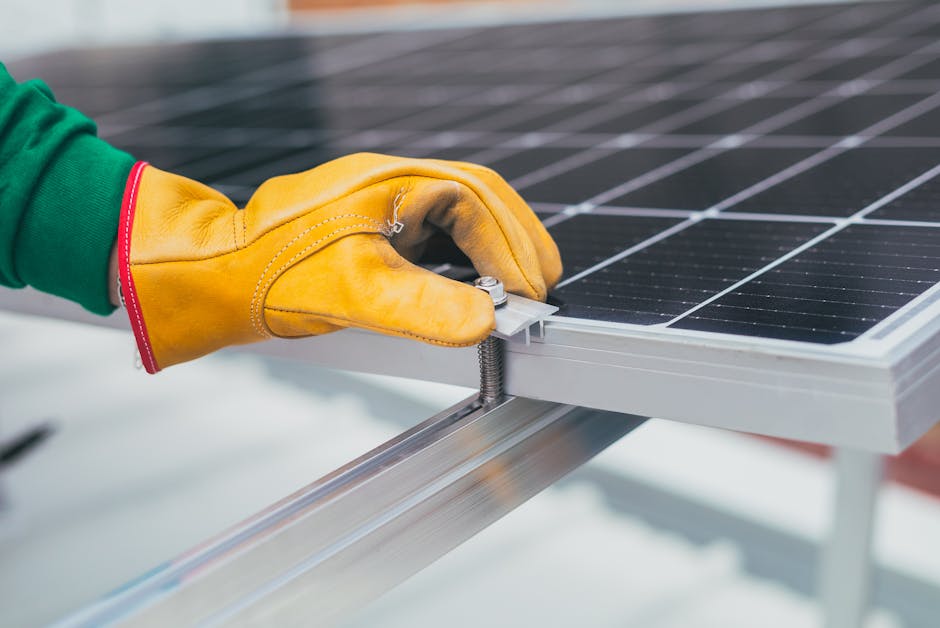
Solar mounting hardware bolts are the fasteners that join rails, clamps, roof hooks, and module frames into a load-bearing structure. They might account for less than 2% of total project material cost, but if they fail early, the whole PV array becomes a safety liability. I’ve walked sites where rusted bolts had to be replaced after just three years—not because the bolt itself was “bad,” but because the material spec didn’t match the installation environment. When you’re procuring for an EPC contract or a commercial rooftop, the question isn’t just “do we have bolts?” It’s “will these bolts still hold torque and resist corrosion after a decade of thermal cycling and wind vibration?”
Key Takeaways
- Material choice (carbon steel, stainless steel A2, or A4) determines whether the bolt survives a coastal site or a dry inland rooftop without losing clamping force.
- Strength grade and thread type must match the rail channel and clamp design; using a generic 4.6 bolt where an 8.8 is required leads to joint slip under wind uplift.
- Compatibility with the full mounting assembly—including washers, T-nuts, and rail slots—eliminates the need for on-site drilling or re-tapping that wastes installation time.
Why Bolt Material Choice Is More Than Just “Stainless or Not”
Carbon steel bolts with hot-dip galvanizing or zinc flake coating are common in inland projects because they’re cheaper and strong. But near a coastline, airborne salt changes everything. The coating gets attacked at scratches, and the underlying steel rusts, expanding and loosening the connection. For these environments, stainless steel bolts are not a luxury—they’re the minimum. But not all stainless is equal. A2 (304) stainless works for most urban and rural jobsites. A4 (316) with added molybdenum handles salt spray, industrial chemicals, and high humidity without pitting. I’ve seen EPC teams try to save money by mixing galvanized bolts with aluminum rails on a seaside project. Within 18 months, galvanic corrosion turned the connection points white and flaky, and the clamping force dropped below safe levels.
Engineering Tip: Environment Dictates Material
Always check the project’s ISO 9223 corrosion category. C3 (urban/industrial) can usually use zinc-flake coated carbon steel or A2 stainless. C4–C5 (coastal, heavy industry) demand A4 stainless or better. The bolt’s protective coating must match the mounting structure’s design life—not the warranty of the PV module alone.
Understanding Bolt Strength Grades and Why They Matter for Wind Uplift
A bolt’s strength grade isn’t just a number on the head. For metrically marked fasteners, 8.8 or 10.9 grades indicate tensile strength (800 MPa and 1000 MPa respectively). Stainless bolts follow a different system: A2-70 gives 700 MPa. When an array faces wind uplift, the bolts at roof attachments and rail splices take cyclic loads. If the bolt’s tensile strength is too low, the joint can open micro-gaps. Over repeated gusts, these gaps widen, and the structure rattles. I’ve been called to troubleshoot after a storm where mid-rail splices pulled apart because 4.6 grade bolts were substituted without design review. Replacing them with A2-70 or 8.8 zinc-flake bolts and re-torquing solved the issue, but only after modules had already been displaced.
The strength grade also affects the torque-to-clamp-force relationship. Higher-grade bolts can be torqued to higher values, generating more clamping force without yielding. But over-torquing a lower-grade bolt in an attempt to “make it tight” risks snapping the bolt or stripping the rail channel. Always match the grade to the mounting system manufacturer’s specified torque standard—usually 8–15 Nm for M8 hardware in aluminum rails, depending on thread engagement.
The Galvanic Corrosion Trap: Mixing Metals in Solar Mounts
When aluminum, steel, and stainless steel meet in the presence of moisture, one metal becomes the anode and corrodes faster. In solar mounting, the most common mistake is using carbon steel bolts directly against aluminum rail slots without isolating washers or with damaged coating. The aluminum rail surface corrodes around the bolt hole, enlarging it. Clamp force drops, and the module frame can shift. The fix isn’t complicated: use stainless steel bolts with proper flat washers and spring washers designed for aluminum contact, or ensure that carbon steel bolts have a high-quality, undamaged coating and that nylon or stainless steel serrated washers prevent direct aluminum-to-steel contact. In some designs, bi-metallic plastic inserts are used inside rail channels to separate materials completely.
Onsite, I’ve found technicians using mixed-metal hardware from different suppliers because “it fits.” That casual approach can void the mounting system warranty and create hot spots where corrosion accelerates. Procurement teams should specify a complete fastener kit from one supplier, with material compatibility already engineered into the set.
Pre-Assembled vs Loose Bolts: What Affects Installation Labor?
Bolts that come loose in bags might seem minor, but on a multi-megawatt ground-mount or a 500 kW rooftop, the time spent handling individual washers, spring locks, and nuts adds up. Pre-assembled hardware—where the bolt, flat washer, spring washer, and T-nut are factory-fitted—reduces dropped parts, alignment issues, and installation steps. I’ve clocked labour savings of roughly 8–12% on rail-fastening alone when crews use pre-assembled sets, because they don’t have to piece together tiny components on a tilted roof or while wearing gloves in freezing weather. This doesn’t just save time; it reduces installation errors like missing a spring washer, which can lead to loosening over thermal cycles.
However, pre-assembled bolts aren’t always compatible with all rail profiles. The T-nut must match the slot geometry exactly—some rails use 10 mm slots, others 12 mm, and the thread pitch of the bolt must align. When ordering, it’s safer to get the hardware from the same manufacturer that produced the rails, or to send a rail section sample to the bolt supplier for fit testing before bulk shipment.
Common Field Mistakes with Torque and Clamp Force
Even with the right bolt material and grade, poor torque control undoes everything. Over-torquing M8 stainless bolts can gall the threads, especially with A2-on-A2 contact without lubricant. Once galling starts, the bolt seizes, and you can’t tighten or remove it without cutting. Under-torquing leaves the clamp loose, risking module slip during wind. The correct approach: use a calibrated torque wrench, not an impact driver on full power, and apply anti-seize compound on stainless threads when specified. For critical attachments—roof anchors, ground screw head connections—check torque with a digital wrench and record a sample of values per row. That simple quality check takes a few minutes but catches problems before extreme weather hits.
Another common mistake is tightening bolts without aligning the module frame properly in the clamp. If the clamp’s grip zone is off by a few millimeters, the bolt may feel tight but the module edge isn’t fully engaged. Always follow the mounting system’s clamp positioning diagram—many mid and end clamps require 6–10 mm of frame engagement, and the bolt must be tightened only after the panel is seated flat.
How to Specify the Right Bolts for Your Project
When procurement sends an RFQ for “solar bolts,” the details that actually prevent field failures often get left out. Below is a comparison table that cuts through the choices based on project environment and system requirements.
| Bolt Type | Material & Coating | Typical Strength Grade | Corrosion Resistance | Best For | Caution |
|---|---|---|---|---|---|
| Hot-Dip Galvanized Carbon Steel | Fe, HDG coating | 8.8 or 10.9 | Good for inland, C1–C2 zones | Ground-mount, low-cost inland rooftops | Not for coastal use; coating damage leads to rapid rust |
| Zinc Flake Coated Carbon Steel | Fe, zinc flake (GEOMET, etc.) | 8.8 to 10.9 | Better than HDG, some up to C3 | Rural/urban commercial roofs, moderate humidity | Check compatibility with aluminum washers to avoid galvanic pair |
| Stainless Steel A2-70 | A2 (304), bare | A2-70 (700 MPa) | Good for C3, most non-coastal | Standard choice for aluminum rails, residential/commercial | Thread galling risk if over-torqued; use anti-seize |
| Stainless Steel A4-70 / A4-80 | A4 (316), molybdenum added | A4-70 or A4-80 | High, suitable for C4–C5, coastal, industrial | Seaside projects, high-humidity, salt spray environments | Higher cost; verify genuine A4, not mislabelled A2 |
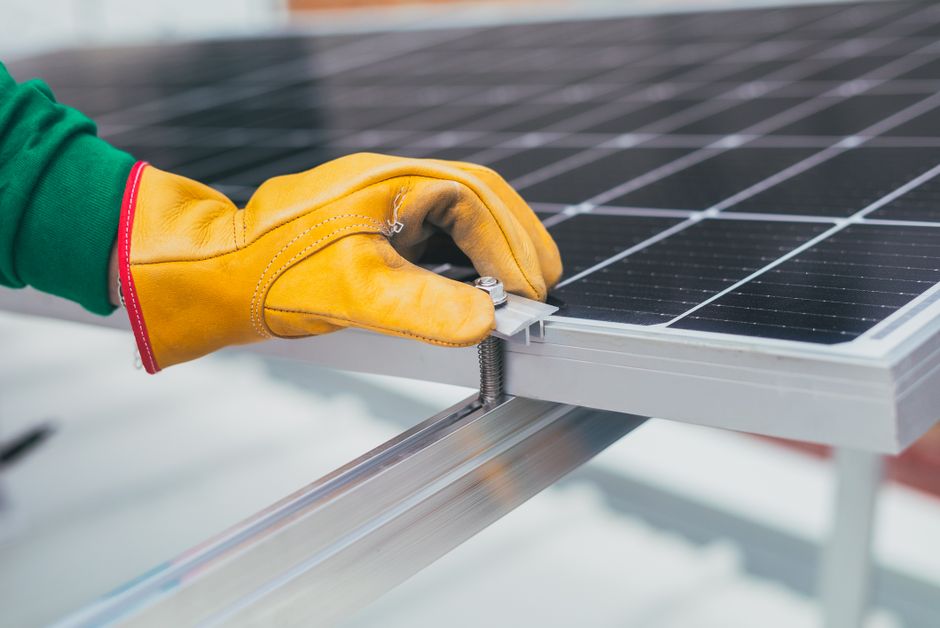
Beyond material and grade, the bolt’s head style matters. Hex-head bolts with a flange or captive washer help tool access in tight rail slots. Socket-head (Allen) bolts allow flush installation but can strip easier under high torque. T-bolts with serrated base plate grip the rail slot to prevent twist during tightening. For mid and end clamps, flange nuts or serrated flange nuts distribute clamp force and resist vibration loosening better than plain nuts.
Frequently Asked Questions
What causes solar mounting bolts to come loose over time?
Thermal expansion and contraction of aluminum rails, wind-induced vibration, and inadequate preload. If a spring washer or serrated lock washer isn’t used, or if torque was insufficient, the bolt backs off. Also, corrosion thinning the thread diameter reduces clamping force invisibly.
Can I use standard hardware store bolts for a small PV project?
It’s risky. Hardware store bolts often lack traceable mechanical properties and corrosion protection suitable for outdoor use. Even for a small residential array, stainless steel or coated fasteners with known grades are needed to match the mounting system design and local building codes.
How do I verify bolt compatibility with my rail system?
Check the rail slot width, T-nut size, and thread pitch (commonly M8×1.25 or M10). The bolt length must be enough to engage at least 6–8 full threads after passing through the clamp and module frame thickness. Test with a sample rail and clamp assembly before ordering in bulk.
Should I ask for test certificates when buying solar bolts?
Yes. For EPC contracts, request material certificates (3.1 per EN 10204) that confirm chemical composition and mechanical properties. For stainless, a certificate showing molybdenum content helps ensure it’s genuine A4 and not mislabelled A2. For coated bolts, salt spray test reports (e.g., ISO 9227) indicate life expectancy.
Can I mix bolt types if I run short on site?
Never. Mixing galvanized steel bolts with stainless steel, or even different stainless grades, in the same joint can speed up galvanic corrosion or create uneven clamping forces. It also makes future maintenance and torque verification inconsistent across the array.
Before You Send a Quotation Request
Procurement for solar mounting bolts works best when the RFQ includes more than just “M8 bolt, stainless steel.” List the required grade, coating, length, head style, whether pre-assembled or loose, and the specific rail profile it will slide into. Include an environmental description: “coastal, 500 m from shore, C4 zone” tells the supplier much more than “outdoor.” If the project needs to meet AS/NZS 1170, Eurocode 1, or UL 2703, mention that upfront—some bolt coatings and materials are required to support grounding certification paths.
At Wanhos, we’ve integrated this thinking into our mounting system supply. Our aluminum rail profiles come with matched SUS304 or A4-70 stainless T-bolt kits, factory pre-assembled where appropriate, and torque specifications tested on full-scale prototypes. When project conditions demand specific corrosion resistance or load performance, our engineering support helps select the correct hardware set without guesswork. If you’re planning a PV installation and want a mounting solution where the bolts are already engineered for the location, reach out with your site details and module layout. We’ll recommend a package that keeps those tiny but critical parts from ever becoming the weakest link.